The situation in Lanzarote has once again raised concerns about safety along the Canary Islands’ coast. The disappearance of a young American swept out to sea by a powerful wave prompted a large-scale rescue operation involving firefighters, divers, and aviation units. For many locals and visitors to the archipelago, this incident is a stark warning: even familiar paths and popular natural pools can be deadly, especially during storm alerts.
In recent years, the Canary Islands have seen a growing number of water-related incidents, with each new case stirring strong public reaction. This time, it involved a group of young people who, despite official bans and storm warnings, ventured to the famous Los Charcones natural pools in the southwest of Lanzarote. Access to the area had been closed due to the declared weather alert, but that did not deter the group, who decided to reach the shore on foot.
Incident details
The incident occurred on Sunday, around three in the afternoon, when a powerful wave knocked four young people off the rocks. Two ended up on the cliffs, while the other two were thrown into the water. Only two managed to get out on their own, sustaining minor injuries. The current swept the others away, and just one was rescued later by helicopter and lifeboat. The young man was brought to shore showing signs of hypothermia and early-stage drowning, but his condition was described as moderate.
The fate of the fourth member of the group remains unknown. Immediately after the incident, all available resources joined the search: rescue teams, police, divers, and a drone with a thermal camera provided by the Yaiza municipality. The operation is complicated by severe weather conditions—on this day, a warning for high waves was in effect across the entire archipelago, with waves on Lanzarote and Fuerteventura reaching up to five meters.
Search operation
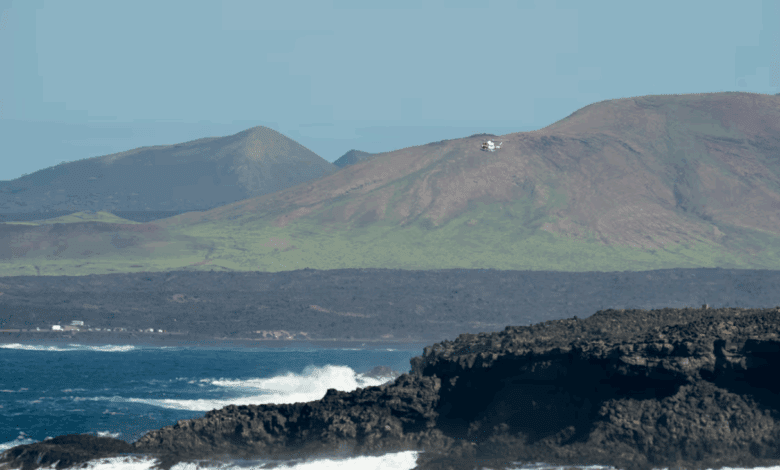
On Tuesday, additional units joined the search: firefighters from the Emergency Consortium, two specialized Civil Guard diving teams, and a 112 service helicopter. The area is being inspected from the air, by water, and by land, with the search for the missing person ongoing. Local police are also involved, using drones to monitor hard-to-reach sections of the coastline.
According to emergency services, the area where the incident occurred is officially closed to swimming during storm warnings. However, the popularity of Los Charcones among tourists and locals, fueled by posts on social media, often leads to bans being ignored. As a result, rescuers have to work under increased risk, and such tragedies are becoming ever more frequent.
Consequences and statistics
This is not the first such incident in recent months. In December, a 27-year-old Italian died in the same area after being swept out to sea while fishing. His body was found half a kilometer from where he fell, despite the rescuers’ efforts. That same week in Tenerife, four people died after being struck by a similar wave, when a group of seven found themselves in a dangerous spot near the water.
According to the Association for the Prevention of Water Accidents, 69 people drowned in the Canary Islands last year — only slightly less than the year before. Experts note that most tragedies occur in places where swimming is prohibited or not recommended, as well as during periods of bad weather. Despite regular warnings, many vacationers continue to ignore the danger.
Impact on Tourism
Incidents like these inevitably affect the region’s reputation and raise questions about whether safety measures are sufficient. Island authorities stress that all hazardous areas are marked with special signs and storm warnings are updated regularly. Nevertheless, the flow of tourists to natural pools is not decreasing, and online posts only fuel interest in these spots.
In the current situation, rescue services are forced to increase patrols and carry out additional awareness campaigns. However, experience shows that even the strictest bans do not always deter thrill-seekers. For many, the tragedy in Lanzarote served as a reminder that nature does not forgive recklessness, and the consequences can be irreversible.