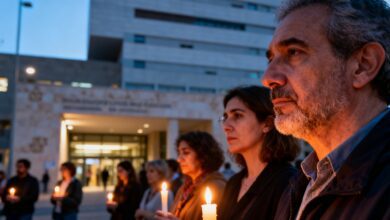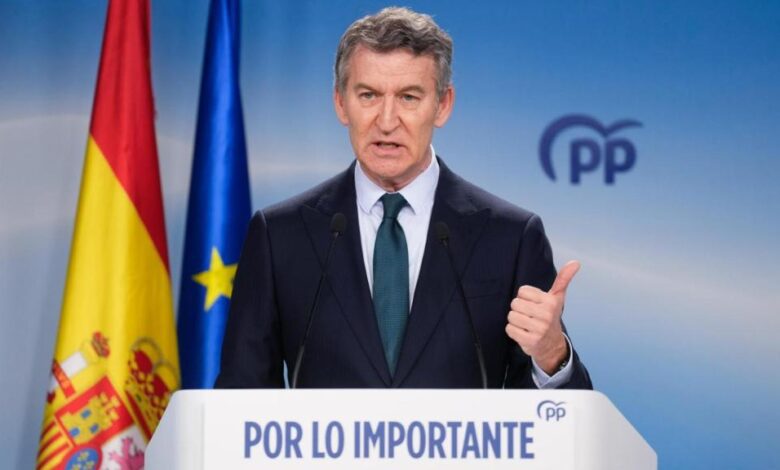
Five days after the horrific train accident in Adamuz, the government’s silence has become louder than any official statement. Forty-five people lost their lives, dozens more were injured, and Prime Minister Pedro Sánchez seems to have vanished from the public eye. Alberto Núñez Feijóo, leader of the Partido Popular, made no effort to conceal his indignation: society is expecting not just condolences, but clear answers. In his words, the head of state’s silence is eroding trust in the system and leaving people uncertain about the safety of travel across the country.
Questions are mounting every day. Why didn’t the president address the nation immediately after the tragedy? Why is there still no transparency regarding the causes of the disaster? Feijóo insists: only Sánchez’s personal involvement can restore citizens’ confidence. He is calling for an emergency parliamentary session so the prime minister can explain what is happening with Spain’s railway infrastructure and who will be held responsible for the string of accidents.
Crisis of trust
The situation is being aggravated by a series of rail incidents. Four accidents have occurred in just one week, including the tragedy on the Rodalíes line in Catalonia, where an engineer died after a wall collapsed onto the train. Feijóo points out: if the tracks are safe, why limit speed? And if not, why weren’t measures taken sooner? Decisions made by Adif, the rail infrastructure company, have only intensified the confusion: over one day, speed limits on the high-speed section between Madrid and Barcelona changed three times, and the same restrictions were soon applied to other routes as well.
Questions for the leadership of the transport sector are mounting. The Ministry of Transport is mired in scandals and arrests: former minister José Luis Ábalos and ex-Renfe advisor Koldo García have landed behind bars. Investigations are also underway against former Adif head Isabel Pardo de Vera and other high-ranking officials suspected of contract fraud. Feijóo does not hide his frustration: in his view, the system is riddled with nepotism and incompetence, with unqualified individuals holding key positions.
Systemic failures
The memory of a massive blackout that paralyzed Spain for ten hours just nine months ago is still fresh. At that time, as now, authorities failed to provide clear explanations. Feijóo points out: in just half a year, the country has faced two of the biggest disruptions in the operation of key government services. This is no longer a coincidence but a sign of a deep governance crisis.
The opposition leader is convinced that this is not a string of unfortunate incidents, but a systemic problem. He accuses the government of failing to ensure safety and stability, as well as lacking transparency. According to him, citizens have a right to know who makes decisions, how they are made, and why those decisions turn out to be so contradictory.
Demand for accountability
On Friday, Feijóo convened the crisis response team at the party headquarters. The discussion was attended by economic vice-secretary Juan Bravo, former Renfe president Pablo Vázquez, and railway transport experts. The main objective is to develop a strategy to pressure the government and demand a public explanation from Sánchez.
At the same time, Feijóo maintains constant contact with the party’s parliamentary representatives to coordinate actions in both Congress and the Senate. If the Socialists refuse to discuss the issue in the lower house, the opposition plans to bring it before the Senate.
Prime Minister’s response
As the opposition increases pressure, Pedro Sánchez has finally broken his silence. Speaking from Brussels, he promised a fully transparent investigation into the accidents in Adamuz and Gelida, assuring that the government would assume full responsibility. However, these words came only several days after the tragedy, when public dissatisfaction had already reached its peak.
The question of why the prime minister did not address the issue immediately remains open. Society expects not just promises, but concrete action. Meanwhile, trust in the authorities continues to decline, and the opposition uses the situation to further pressure the government. Across the country, there is a growing sense that no one is in control, and responsibility for citizens’ lives is diffused among various departments and officials.