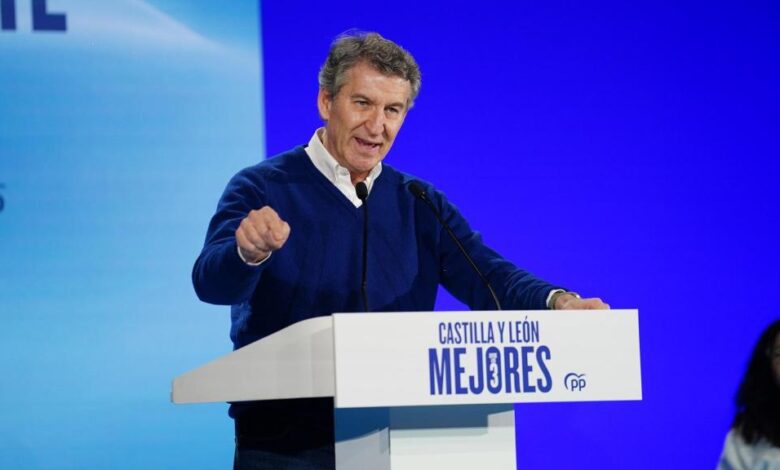
Spain’s political landscape has once again come under the spotlight following remarks by Alberto Núñez Feijóo, leader of the Partido Popular (PP). His statement that the party will not enter coalitions, but is open to individual agreements with Vox, could shift the balance of power in the country. For many Spaniards, this signals potential changes in regional governance and new approaches to forming administrations.
Feijóo emphasized that the PP does not intend to form coalition governments, but does not rule out targeted agreements with Vox if the situation demands it. In his view, both political forces must respect the will of the voters and act in line with election results. He stressed that the only insurmountable barrier for the PP remains Bildu, which he described as the heir to a terrorist organization, underlining the impossibility of any agreements with this party.
A coalition-free strategy
In an interview published by a leading Spanish outlet, Feijóo stated that the PP will form governments independently, but does not rule out Vox’s support on specific issues. He noted that cooperation is only possible when necessary for stability and reflects the will of the people. At the same time, any contacts with representatives of so-called ‘Sanchismo’ or with independent forces acting outside the Constitution are excluded.
The PP leader also pointed out that the rise in Vox’s popularity is largely due to the current government’s policies. According to him, Pedro Sánchez’s strategy to strengthen Vox’s position did not yield the expected results; on the contrary, it led some socialist voters to switch to their opponents.
Impact on the regions
Feijóo places particular importance on forming government in regions like Aragón and Extremadura, where the PP is counting on leadership with Vox’s support. He believes voters have clearly expressed their will, and now it’s up to the parties to fulfill that mandate. At the same time, any attempt to negotiate with forces that do not recognize the constitutional order is, in his view, unacceptable.
Against the background of recent changes to the country’s political landscape, it is worth noting that Vox’s successes in Aragón’s municipalities have already led to significant shifts in regional politics. This is highlighted in a report covering the party’s growing influence in Teruel and cities with high migration rates— details on the changes in Aragón.
Red lines and challenges
Feijóo clearly defined what is acceptable for his party. He stressed that any negotiations with Bildu are impossible, and cooperation with independence-seeking forces is only possible within the framework of the Constitution. In his view, this approach will help avoid political crises and maintain the country’s stability.
At the same time, the PP leader openly acknowledges that political rivalry with Vox remains intense. Despite targeted agreements, tensions between the parties persist, especially against the backdrop of the far-right’s growing popularity in certain regions. This poses additional challenges for the PP, which aims to maintain its leadership and not lose the trust of its voters.
In recent years, Spain has repeatedly faced situations where government formation depended on complex negotiations among parties. For example, in the recent elections, none of the political forces managed to secure an absolute majority, making compromises necessary. Such scenarios have already led to instability and lengthy negotiations, impacting the country’s economy and social life. The rise of new parties like Vox and changing electoral preferences continue to shape the political landscape, making every new statement by leaders the focus of close public attention.