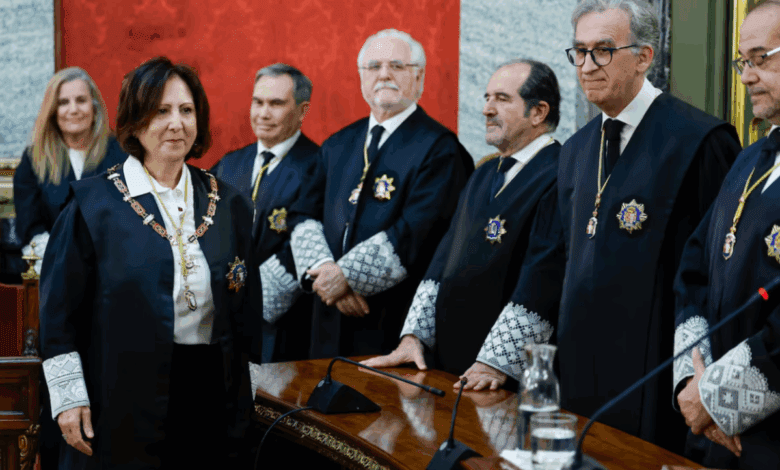
A new wave of debate has erupted in Spain after Teresa Peramato, the current Attorney General, signed off on the return of her predecessor Álvaro García Ortiz to the Supreme Court. García Ortiz, who was previously sentenced to a two-year ban from holding office for disclosing confidential information, has now resumed his seat in the Labor Disputes Section. This decision was made possible thanks to a specific interpretation of the law and reliance on old precedents, sparking mixed reactions among legal experts and the public.
Peramato, acting on the Inspectorate’s findings, pointed out that if the sentence does not exceed six months of imprisonment, a prosecutor may avoid dismissal from the profession. In García Ortiz’s case, the sentence meant a two-year ban on holding leadership positions, but it did not strip him of his status as a public official. As a result, the former Attorney General was able to return to work, albeit not to his former leadership post but as a senior-ranking prosecutor.
Legal nuances
The decision is based on Article 44.2º of the Organic Statute of the Public Prosecution Service, which allows for suspension from duty instead of dismissal if the penalty does not exceed six months. In García Ortiz’s case, the punishment involved temporary removal from leadership, not imprisonment. The Inspectorate carefully reviewed the details and concluded that his return would not violate the law.
There have already been cases in Spain where prosecutors convicted of deliberate crimes did not lose their status as civil servants. However, such decisions have always sparked debate, as they raise questions about trust in the prosecutorial institution and the extent to which returning to work after serious violations is acceptable.
Community reaction
The legal community was deeply divided by Peramato’s decision. Some argue that the law should be applied equally to all, and if there is an opportunity to return, it should be used. Others believe that such precedents undermine trust in the judicial system and set a dangerous example for future generations of prosecutors.
Particular attention was drawn to the fact that García Ortiz returned not to a leadership position, but to a department that rarely finds itself in the spotlight. According to some experts, this may be an attempt to ease public discontent and allow the former Attorney General to continue his career with minimal publicity.
Questions of trust
García Ortiz’s return has once again brought questions of transparency and fairness in Spain’s justice system to the forefront. Many are left wondering: How acceptable is it for someone convicted of a deliberate offense—even without imprisonment—to return to their post? The answer remains unclear, and it appears that debate on this topic is only gaining momentum.
Nevertheless, Peramato’s decision has already sparked debate not only among legal experts but throughout society. Some see it as an example of flexibility and respect for the letter of the law, while others consider it a threat to the reputation of the entire system. One thing is clear: this case will long remain a reference point in debates about the boundaries of what is permissible in Spanish justice.