The events that unfolded in central Barcelona have become a wake-up call for everyone concerned with the safety of mass gatherings in Spain. A lack of coordination between police units led to an escalation of the conflict, prompting widespread discussion among city residents and public order experts. As a result, what began as a routine meeting of an unusual community turned into serious consequences for the city’s infrastructure and the reputation of law enforcement.
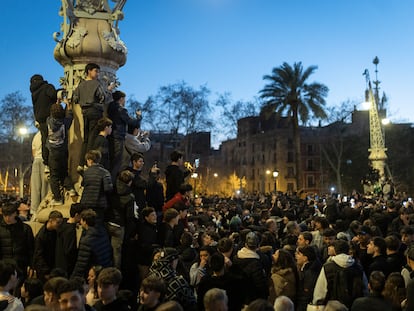
This past Saturday, members of the Therian community—people who identify as animals—gathered on Paseo de Lluís Companys. According to El Pais, the event drew the attention not only of participants but also thousands of onlookers, many of whom came out of curiosity or even to mock the spectacle. In the end, more than 3,000 people assembled, greatly complicating things for the police.
Coordination failure
From the outset, maintaining order was left to the city police, Guardia Urbana. The Catalan police, Mossos d’Esquadra, limited themselves to observing, considering the gathering harmless. However, when property damage was reported in an underground parking lot, Guardia Urbana called for backup from Mossos. At that point, the situation spiraled out of control: objects were thrown at police officers, and the crowd began acting aggressively.
According to city police representatives, it was the lack of clear coordination between units that led to the escalation of the incidents. The Mossos were slow to deploy additional forces, believing that the situation did not require intervention by special units. Only half an hour after the first alarming signals did they decide on a joint crowd dispersal operation, but by that time the unrest had already begun.
Escalation of the conflict
While some police officers tried to restore order in the parking area, others were forced to protect underage participants of the gathering who took refuge in a shop, escaping from aggressive passersby. Soon, makeshift barricades appeared in the streets, trash bins were set on fire, and city property was damaged. Mossos d’Esquadra deployed a public order unit, but their arrival took about 20 minutes, causing discontent among city police officers.
As a result of the police joint operation, the crowd was dispersed and order was restored only after ten in the evening. Four people were detained, three of them minors. Barcelona authorities are currently analyzing the causes of the coordination failure and assessing the damage to the city.
Aftermath and response
This incident has once again raised the issue of the need for clear coordination between various police departments during mass events. Experts point out that the lack of a unified command center and underestimation of risks can lead to unpredictable consequences, even at seemingly harmless gatherings. In this case, according to El Pais, it was precisely the lack of coordinated action that triggered the unrest.
In recent years, Spain has already witnessed cases where large gatherings of young people or themed communities escalated into spontaneous riots. For example, in 2024, after an unauthorized party in Madrid, clashes with the police broke out and dozens were detained. Similar incidents occurred in Valencia and Seville, where delayed police response led to escalating conflicts. These events highlight the importance of timely risk assessment and coordinated action by all services to prevent such situations from recurring.