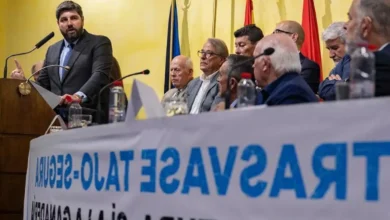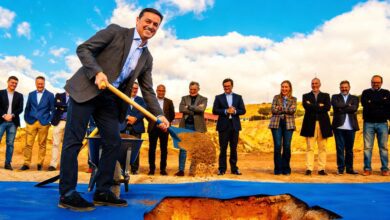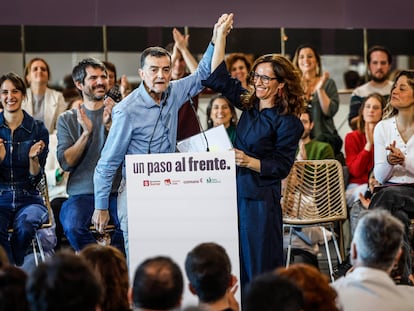
A new chapter is beginning for Spain’s left-wing parties, one that could reshape the country’s political landscape. Four organizations—Más Madrid, Izquierda Unida, Comunes, and Movimiento Sumar—have been negotiating for several months to create a unified platform. Their goal is not just to merge, but to present voters with a viable alternative to the traditional parties. This move comes as a response to disappointment after recent elections and internal conflicts that have weakened the left’s position.
Work on this new format is progressing without much publicity, but it’s also not a secret. Party representatives actively participate in parliamentary initiatives, discuss joint projects, and look for common ground. Health Minister Mónica García emphasizes that this cooperation has been underway for quite some time and didn’t start suddenly. Antonio Maíllo also plays a key role in this process; since becoming coordinator of Izquierda Unida, he has focused on unity and a long-term strategy.
Internal disagreements
Despite their shared desire for unity, there are still significant disagreements within the coalition. The main issue is the lack of a single leader and a clear process for selecting candidates. Deputy Prime Minister and Labor Minister Yolanda Díaz has yet to reveal her plans regarding participation in the elections, adding to the uncertainty. According to El Pais, many believe that it is the left’s fragmentation and sheer numbers that are holding them back, rather than the issue of leadership.
The situation is further complicated by relations with Podemos, which moved into opposition after the 2023 elections and now acts independently. Their departure triggered a wave of criticism towards Sumar, accused of isolating former allies. Following the defeat in the European elections, Yolanda Díaz resigned as leader of Sumar to focus on her government work. Other members of the platform openly express dissatisfaction with Sumar’s dominance but continue to cooperate for a common goal.
Searching for the formula for success
So far, neither a single candidate nor a universal formula for uniting all left-wing forces has been found. Nevertheless, participants in the process are confident they can offer voters a clear program and practical solutions. They are relying on their experience in government and parliament, as well as new initiatives designed to capture public attention. Among these is a ban on minors under 16 from accessing digital platforms, being developed by the Ministry of Youth and Children under the leadership of Sira Rego (Sira Rego), and a proposed monthly child-raising allowance put forward by Minister Pablo Bustinduy (Pablo Bustinduy).
Despite internal disputes, Sumar ministers note that the government led by Pedro Sánchez continues to launch socially significant projects. In their view, this proves that the left has the potential for change, even if current polls favor right-wing parties. They have no intention of backing down despite difficulties and the absence of a single leader.
Context and comparisons
Internal party conflicts and the struggle for leadership are not unique to the left. Similar dynamics are observed among other political forces as well. For instance, Vox is actively consolidating its positions in regions where other players previously dominated. Their strategy, as noted in the article about why residents of small towns choose change, relies on direct dialogue with voters and a focus on pressing social issues. This demonstrates that electoral success often depends not only on programs but also on the ability to listen to people.
According to El Pais, Sumar ministers continue to advocate for the implementation of key initiatives despite pressure and disagreements with the socialists. In particular, they are pushing for laws aimed at protecting children and supporting families. Inside the coalition, members acknowledge that the path to unity will be challenging, but believe that giving up the fight is not an option.
In recent years, Spain has become a testing ground for numerous political experiments and new alliances. After the 2023 elections, left-wing parties faced serious challenges: declining support, internal conflicts, and some deputies leaving for independent groups. Similar processes occurred in other European countries, where leftist forces sought new ways to unite. In Spain, attempts to create a unified platform had been made before, but only now have they reached such a significant scale. In the coming months, it will become clear whether these new alliances can reshape the balance of power on the political stage.