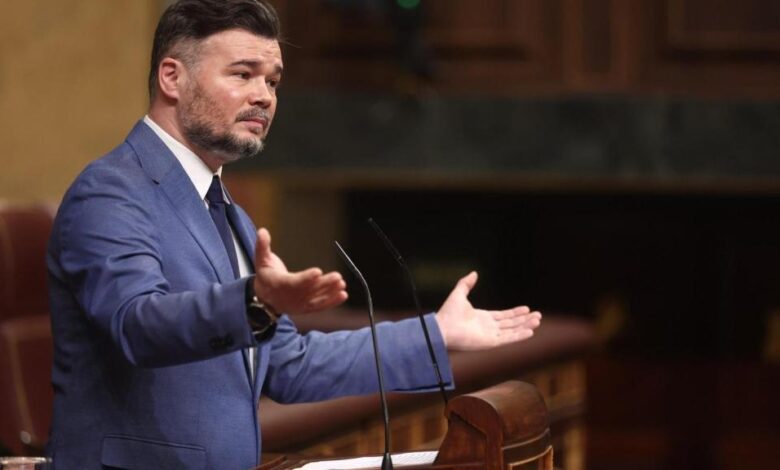
The attempt to unite disparate left-wing forces and independence supporters into a single platform could reshape Spain’s political landscape. Gabriel Rufián has unexpectedly announced his readiness to lead a broad leftist front, one capable of winning votes not only in Catalonia but also in other regions of the country. This initiative has already sparked lively debate, especially in Andalusia, where local leftist movements are traditionally strong and skepticism toward Catalan politicians runs high.
Rufián emphasizes that his desire to represent the interests of cities like Algeciras does not make him any less Catalan or less of an independence supporter. On the contrary, he believes this makes him more pragmatic and more useful to society. However, many in Andalusia view such statements with suspicion. In regional parliamentary corridors, left-wing party leaders openly express irony: the idea of a united front led by Rufián strikes them as unrealistic.
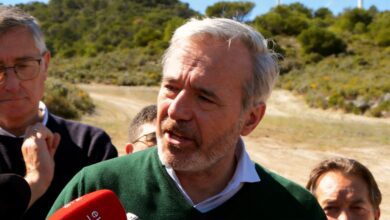
Inma Nieto, leader of the Por Andalucía coalition, remarks that any attempt to establish dialogue among leftist forces deserves respect. She notes their coalition has long practiced cooperation with other parties, and such initiatives are nothing new for the region. However, she says Rufián’s choice of Algeciras as an example is rather random and doesn’t carry much weight in the context. Much more important, according to Nieto, is to find real common ground and have honest discussions about what each party is willing to do for future alliances.
Resistance in the south
Within Andalusian leftist parties, it is acknowledged that the idea of uniting the votes of independence supporters and traditional leftists raises many questions. How can voters be convinced to back a politician who, in Madrid, demands special conditions for Catalonia? According to sources close to Rufián, he has already held informal consultations with representatives from the left, but his initiative has not generated much enthusiasm.
Skepticism is heightened by the fact that Rufián is mostly popular among young people and on social networks, which are largely dominated by right-wing views. This is not enough to form a truly broad coalition. In addition, the lack of a clear election timeline makes it premature to nominate a single candidate, which could only weaken the potential leader’s position.
So far, there is little support for Rufián’s idea in Andalusia. Local leftists fear that trying to unite such diverse political movements could lead to internal conflicts and erode voter trust. Nevertheless, the very discussion about the need for left-wing unity is once again relevant amid political changes in the country.
Reaction and consequences
Interest in Rufián’s initiative has also been fueled by recent political scandals. For example, in recent weeks, Spanish society has been actively discussing a sharp public spat between journalists and Elon Musk regarding statements about Pedro Sánchez. These developments further reinforce the sense that Spain’s political landscape is becoming increasingly polarized, with new alliances and unexpected coalitions potentially playing a decisive role in the country’s future.
Internal debates continue within leftist parties: should they take risks for a hypothetical unification, or would it be better to preserve their autonomy and operate within familiar frameworks? For now, most lean toward the latter, fearing that premature moves could lead to disappointment and a loss of support.
Context and Trends
In recent years, Spain has already seen attempts to form broad left-wing coalitions, but none have achieved lasting success at the national level. Regional differences, historical grievances, and inter-party rivalry have often hindered the formation of a united front. At the same time, political crises and high-profile scandals—such as the recent debates sparked by statements from international figures about the country’s domestic policy—regularly drive the search for new forms of collaboration. Amid growing fragmentation among voters and the strengthening of right-wing forces, the question of left-wing unity once again emerges as a key issue for Spain’s future.