By the end of 2026, Galicia will open Spain’s first public proton therapy center. This project is being carried out with the support of local authorities and is based on technology provided by a well-known charitable foundation. The new facility will mark a milestone for the country’s entire healthcare system, making it possible to use advanced treatments for complex tumors, especially in children.
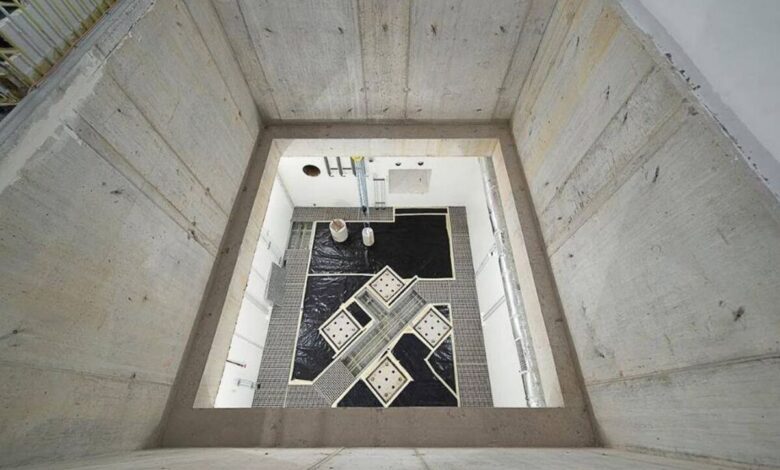
The center is being built next to the university hospital in Santiago de Compostela. At its core are two massive bunkers: one for treatment, the other for scientific research. Around 10,000 tons of specialized concrete have been used for their construction—about the same as the weight of the Eiffel Tower. This level of protection is essential for working safely with high-energy equipment.
Technologies and capabilities of the center
The main equipment at the facility is a proton accelerator, or cyclotron, weighing over 45 tons. Manufacturing and delivering this device is a complex international task: the cyclotron is made in Belgium, shipped by sea to the port of Vigo, and then transported by land to its installation site in Galicia. Assembly and calibration will take nearly a year, with specialists from across Europe and Asia taking part in the project.
Proton therapy is a cutting-edge treatment that targets tumors not with X-rays, but with proton beams. This approach allows for more precise destruction of cancer cells while minimizing damage to healthy tissue. It is especially effective in treating tumors of the brain, spinal cord, and eyes, as well as in young patients where reducing side effects is particularly important.
Patients and funding
The center is expected to treat up to 250 people each year. It will be open not only to residents of Galicia, but also to patients from neighboring regions — Asturias, León, Zamora, and northern Portugal. The first treatment courses are set to begin as early as the end of next year.
The total project cost is estimated at 45.5 million euros. More than half of this amount is allocated for purchasing and installing the accelerator, while the rest covers construction and equipment for the building. Funding comes from both regional authorities and European funds.
Scientific work and international cooperation
The center will serve not only as a treatment facility, but also as a research hub. Here, new therapies will be developed in collaboration with universities and companies from various countries. The project involves a team of engineers and physicists from Spain, Italy, Czechia, the United Kingdom, and Taiwan. Their task is to launch the complex equipment and ensure its uninterrupted operation.
The opening of the Proton Therapy Center in Galicia is a major milestone for Spanish medicine as a whole. It will introduce state-of-the-art technology in cancer treatment and offer hope of recovery to patients for whom traditional methods have not been effective enough.