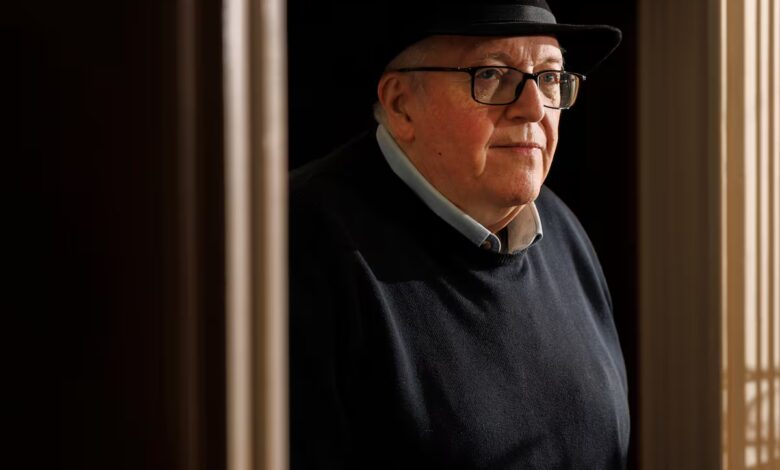
British historian Paul Preston, who has spent decades studying twentieth-century Spanish history, has once again turned his attention to Francisco Franco. Although weary of the subject, he believes it’s vital to debunk the entrenched myths surrounding the dictator and his era. Preston notes that the English-speaking world maintained a positive perception of Franco for a long time, largely due to anti-communist sentiment and support from Western politicians. At the same time, the role of the United Kingdom in the success of the military coup is often overlooked, even though it was British diplomacy that contributed to weakening the Republicans.
Contrary to popular belief, Franco was not a particularly gifted military leader. His strategy relied on the slow and brutal seizure of territory, accompanied by mass repression against supporters of the Republic. According to Preston, Franco’s methods were borrowed from colonial wars in Africa, where he exhibited extreme cruelty towards the local population. Compared with renowned military commanders of the era, such as Rommel or Montgomery, Franco appeared decidedly mediocre.
Corruption and manipulation: how the regime was built
The regime established by Franco was based on the systematic plundering of the country and personal enrichment. Preston emphasizes that the myth of the dictator’s selflessness does not withstand scrutiny: Franco and his family significantly increased their wealth through their hold on power. An essential part of maintaining control was total brainwashing — from 1939, Spain was subjected to strict censorship, and the education system was rewritten to suit the regime. The image of the ‘savior of the nation’ was deliberately crafted to conceal the true motives and methods of governance.
Despite his limited intellectual abilities, Franco was remarkably cunning. He managed to surround himself with loyal officials and ideologues who helped build a stable power structure. Franco’s influence was felt even beyond Spain: his diplomatic maneuvers played a role in drawing Italy into the civil war on the side of the rebels, which proved to be a fatal mistake for Mussolini.
Francoism and its differences from classical fascism
Preston notes that Francoism differed from Italian fascism. While both regimes were authoritarian, Franco lacked many features typical of classic fascist states. Nevertheless, the level of violence in Spain was terrifying: according to the historian, the proportion of citizens killed during the dictatorship exceeded similar figures in Nazi Germany (excluding the Holocaust).
Franco managed to stay in power thanks to the international situation. During the Cold War, the West saw him as an important ally, allowing the dictator to adapt his regime and avoid isolation. External support became a key factor in his long rule.
Antisemitism and Succession of Power
Another dark aspect of Franco was his antisemitism. Despite attempts to portray himself as a protector of Jews, his personal records reveal a deep hostility toward them. The question of succession was also complicated: the future king Juan Carlos was placed in a difficult position, essentially held hostage by the regime. Franco regarded him as the successor to his policy, although he never fully trusted him.
Even after the dictator’s death, criticism of Franco remained a taboo in Juan Carlos’s circle. This reflected the complex relationship between the monarchy and Francoist legacy, which still sparks debate in Spanish society.