The political landscape of Extremadura has changed beyond recognition following the recent regional elections. For the first time in many years, the Socialists have found themselves on the losing side, while the conservatives from the Partido Popular (PP) took the lead with confidence. Although the PP did not achieve an absolute majority, their result was a considerable blow to the region’s former leaders. Vox strengthened its position by increasing its number of deputies, and Podemos also expanded its representation in the Assembly.
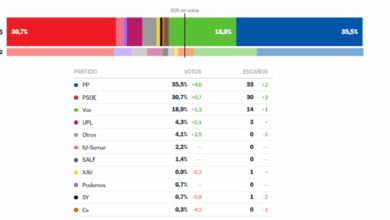
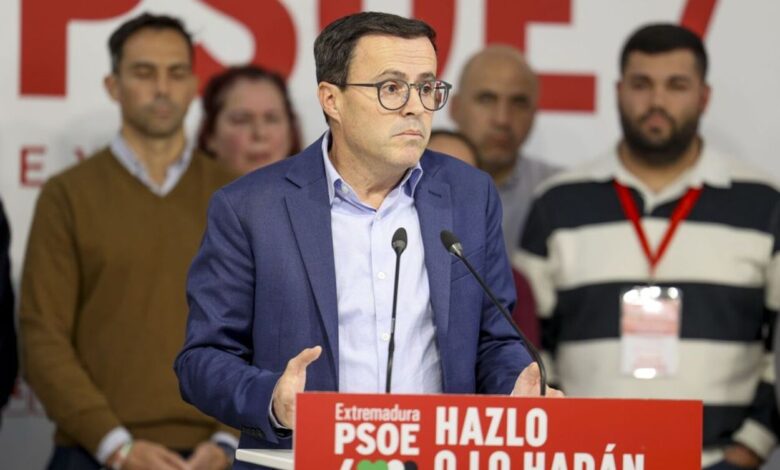
The results in the hometowns of the main candidates drew particular attention. In Villanueva de la Serena, where socialist Miguel Ángel Gallardo was born and built his career, voters unexpectedly gave preference to the PP. This city had always been considered a PSOE stronghold, but for the first time in many years, the conservatives triumphed here. The PP secured 38.65% of the votes, while PSOE received only 30.58%. Vox came in third with nearly 19%, and Podemos-IU earned just over 8%.
This outcome became a symbol of the region’s overall mood. The Socialists lost ten seats in parliament, leaving them with just 18 deputies. In contrast, the Partido Popular increased its presence to 29 seats, though that was not enough for them to govern alone. Vox, securing six additional seats, has become a notable force in regional politics.
Geography of change
In other cities across Extremadura, the trend was even more pronounced. In Cáceres, the hometown of PP leader María Guardiola, the party secured more than half of all votes. The Socialists failed to reach even 17%, while Vox and Unidas por Extremadura lagged far behind. Such a gap between parties in this city became one of the largest in the entire history of local elections.
In Casas de Castañar, the hometown of the Vox candidate, the competition was much tighter. Here, the PP took first place again, but the margin with PSOE and Vox was minimal. This indicates that in rural areas the electorate is divided, and no party can feel secure.
Socialist decline
In Mérida, where Unidas por Extremadura candidate Irene de Miguel voted, the PP also came out on top, gaining over 42%. The PSOE finished second, but their result was almost half as much. Vox and Unidas por Extremadura competed for third place, pointing to growing support both to the right and left of the traditional parties.
The overall sentiment among voters in Extremadura is clear: the region is tired of years of single-party dominance. Despite their long history of success, the Socialists failed to maintain the public’s trust. Their defeat in key municipalities became the main event of this election.
New political landscape
The election results in Extremadura came as a surprise even to seasoned politicians. For the first time in decades, the region stands on the brink of significant change. The Partido Popular has strengthened its position, but to form a government, it will need support from other groups. Vox, having increased its representation, is emerging as a key player in the upcoming negotiations.
At the same time, Podemos and Unidas por Extremadura have demonstrated their ability to expand their influence despite the challenging political landscape. Their successes in certain cities confirm that voters are seeking new alternatives.
Voter fragmentation
The final picture of the elections in Extremadura is not only about a change of leadership, but also a clear split of votes among various parties. In major cities, PP dominates, while in rural areas, the contest is between three or four different forces. For the first time in a long while, the Socialists are in a trailing position, and right-wing parties have a chance to shift the region’s political direction.
These elections mark a turning point for Extremadura. Voters have made it clear they are ready for change, and political parties must now find new ways to win the public’s trust.