In the 1930s, Madrid stood on the brink of sweeping changes as the art decó architectural style became both a fashionable trend and a politically charged phenomenon. Amid instability and ongoing reforms, new buildings and interiors embodied a drive for order, progress, and a sense of confidence in the future. It was during this period that Banco de España decided to expand its premises, marking one of the most striking examples of art decó adoption in the capital.
Style and Change
Art decó, which emerged in Europe after World War I, quickly spread to cities where the need for renewal was palpable. In Madrid, the style became a symbol of breaking away from outdated traditions and an attempt to create a modern urban image. Straight lines, geometric shapes, and luxurious materials emphasized not only aesthetics but also the financial strength of the new building owners. As El confidencial notes, it was at this time that the Spanish capital began to visibly transform: new cinemas, banks, and hotels were being built, and the streets filled with a sense of the future.
At the same time, the country faced serious challenges. After the proclamation of the Second Republic in 1931, society anticipated reforms, but the economic crisis and social conflict prevented many plans from being realized. In these circumstances, architecture became a tool for conveying ideas of stability and trust, especially for institutions like Banco de España.
The Banco de España Project
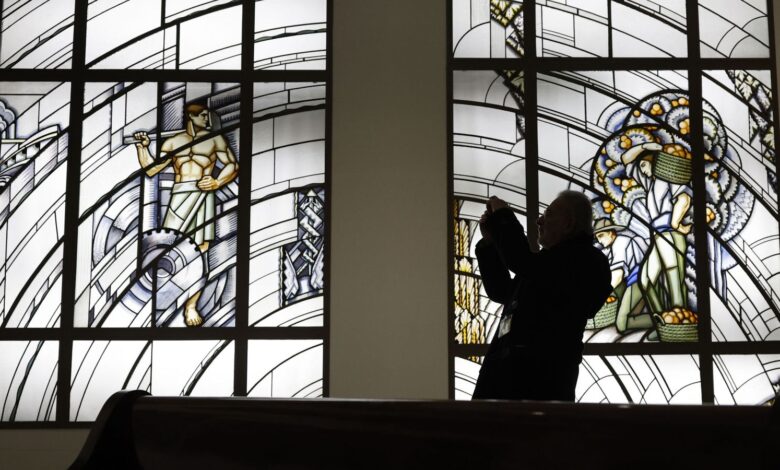
The expansion of Banco de España, carried out by architect José Yárnoz Larrosa, was a true experiment for its time. The project blended modern technologies, new materials, and symbolism that reflected the values of the era. At its heart was the Patio de Operaciones — a spacious hall crowned by a huge glass roof crafted by Casa Maumejean. This area was open to the public and intended to inspire trust among clients and investors.
Special attention was paid to detail: marble, brass, glass, and wrought iron created an atmosphere of luxury and security. At a depth of 35 meters, the Cámara del Oro was built — a vault equipped with modern security systems, designed in response to the financial shocks following the 1929 crisis. According to El confidencial, the architecture and interior design formed a unified concept, with every element emphasizing the bank’s status and its role in society.
Symbolism and Ideology
A highlight of the exhibition was the display of original sketches and drawings created for the glass dome. These materials, long kept in the archives, were shown to the wider public for the first time. The images on the glass depicted themes of labor, industry, transportation, and agriculture — idealized representations meant to inspire faith in progress and harmony. However, as the exhibition’s curators point out, real problems lurked behind this facade: unemployment, strikes, and political tension.
In Europe at that time, art deco was often used to create the image of a strong state, whether in Italy, Germany, or the USSR. In Spain, however, the style became an attempt to express democratic values and a desire for renewal. But social contradictions were growing, and soon the country was drawn into a civil war. Experts note that many projects conceived as symbols of a bright future remained unrealized.
Legacy and Modernity
Today, the Patio de Operaciones of the Banco de España has preserved its historic layout. The glass dome was dismantled during the war but later restored. Original interior elements—wrought-iron grilles, light fixtures, counters—are still in place, a reminder of a time when architecture served not just as decoration, but also as a tool for shaping public opinion.
The exhibition ‘Alegorías de un porvenir’ features more than 150 items: architectural drawings, furniture, banknotes, photographs, and documents. Curators emphasize that the exhibition goes beyond historical analysis, encouraging reflection on the role of architecture and art in shaping the image of stability during times of crisis. In this context, it is interesting to compare how the long-term influence of power on a region can change its appearance and perception, as was the case in Castilla y León, discussed in the material about political stability in the region.
In recent years, interest in Art Deco architecture in Spain has grown significantly. Exhibitions dedicated to this style are being held in Madrid and other cities, historic buildings are being restored, and researchers are increasingly turning to the topic of architecture’s impact on society. Projects like the expansion of the Banco de España remain an example of how art and power can interact, shaping not only the urban landscape but also collective memory.