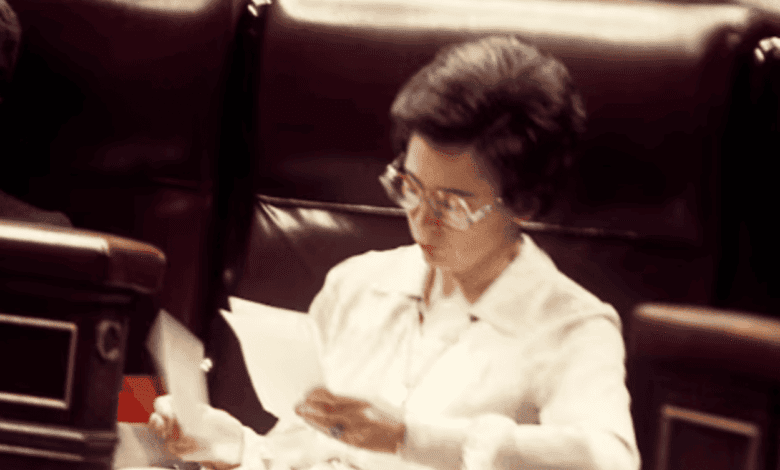
In 1977, Spain stood on the brink of a historic turning point. At the heart of these events was Belén Landáburu, the sole woman among the deputies of Franco’s last Cortes. Her involvement proved crucial in dismantling the dictatorship—a process that still sparks debate and admiration today.
Landáburu, a native of Burgos, now 91, recalls how one day the president of the Cortes, Torcuato Fernández Miranda, stopped his motorcade to personally thank her for her courage and her contribution to change. In those days, as the country teetered between its past and its future, it was her voice and determination that helped Spain take a step toward freedom.
Three days that changed the country
In November 1977, decisive sessions of the Cortes took place in Madrid. Behind the scenes, real political dramas unfolded, worthy of a spy thriller. Newly appointed Prime Minister Adolfo Suárez and his closest associates devised a plan to dismantle the outdated system. Cunning strategies, secret meetings, and even the temporary isolation of the regime’s most conservative members were employed—sending them to Panama so they could not interfere with the process.
During those tense days, the capital was gripped by uncertainty. No one knew whether reforms could be achieved peacefully or if the country faced a new wave of violence. But step by step, thanks to the efforts of people like Landáburu, Spain moved toward democracy.
Hidden players and international pressure
Not only Spanish politicians but also foreign powers played a significant role in these events. The film ‘Voladura 76’ pays special attention to the influence of the United States and the reaction of the international community to the changes in Madrid. After the decisive vote that brought down the old regime, congratulations even came from figures such as Henry Kissinger.
Within the country, Suárez and his team acted cautiously, taking care not to provoke the military or the far-right. They sought compromises and negotiated with former Franco supporters to avoid bloodshed. In the end, despite all the risks, Spain managed to transition to a new political reality.
The legacy of change and a look to the future
The final scenes of the documentary show Suárez gazing thoughtfully at the ceiling of the Cortes after the historic vote. In that moment, he might have already sensed that new challenges lay ahead for the country—just five years later, there would be an attempt at a military coup, which, fortunately, would fail.
The story of Belén Landáburu is a reminder that even a single vote can change the fate of an entire country. Spain in 1977 became an example of how the courage and determination of individuals can lead to true freedom.