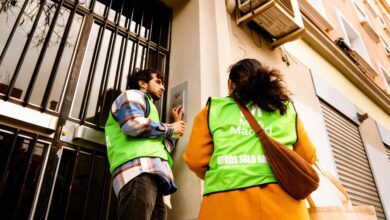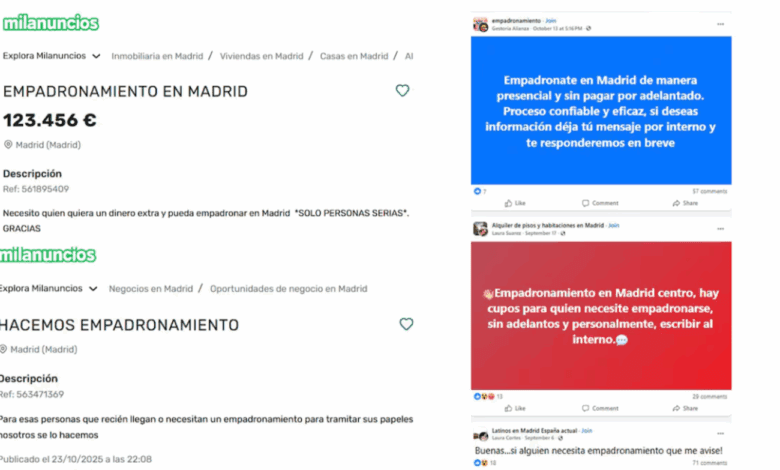
In recent months, Madrid has seen a surge in illegal residency registration offers. What should be a routine, free procedure required to legalize one’s stay has now become a profitable business for enterprising individuals. The price for getting registered at an apartment—or even a commercial property—ranges from €50 to €300. This issue is especially affecting newcomers, who need registration to process legal documents, access medical care, and enroll their children in schools.
Ads offering ‘help’ with registration are increasingly appearing on social networks and messaging apps. Some landlords are adding special clauses to lease agreements, allowing them to charge extra for handling residency paperwork. In some cases, people pay hundreds of euros for a service that, by law, should be free. Faced with bureaucratic roadblocks and being unable to book appointments with the city hall, many turn to intermediaries who promise to speed up the process and guarantee results.
Among those who have used such services are many people living in short-term rentals or even tourist apartments. Some property managers and individuals have set up entire schemes: for a certain fee, they arrange registration at an address where the person doesn’t actually reside. This not only breaks the law but also creates additional risks for both parties. In the event of an inspection, you could lose not just your money, but also your chance to legalize your stay in the country.
Shortage of appointments and rising vulnerability
The black market emerged because of a shortage of available appointment slots at local town halls. Officially, all you need for registration is a lease agreement and proof of payment, but in practice, getting a suitable date has become increasingly difficult. Some intermediaries buy up all available appointments to resell them at a profit. As a result, foreigners find themselves in a vulnerable situation: without registration, you can’t access healthcare, enroll children in schools, or begin the process of legalizing your documents.
City authorities emphasize that everyone residing in Spain is required to be registered at their place of residence. However, in reality, many are forced to find workarounds. In certain districts of the capital, hundreds of people are registered at a single address—often these are social centers or temporary shelters. After restrictions on registration at such institutions were lifted, the number of applicants rose sharply. Over the past two years, thousands have taken advantage of special support programs for vulnerable groups.
Societal consequences and new challenges
Legal experts note that residence registration is a key step for integration into Spanish society. Without it, access to basic rights and services is impossible. Yet, the current situation creates opportunities for abuse and exploitation. Those unable to pay intermediaries find themselves in an even more vulnerable position. At the same time, illegal schemes undermine trust in the system and complicate the work of local governments.
While authorities search for ways to address the problem, the market for illegal services continues to grow. For many foreigners, this is the only chance to obtain official status and start a new life in Spain. But the cost of such a solution can prove too high—both literally and figuratively.