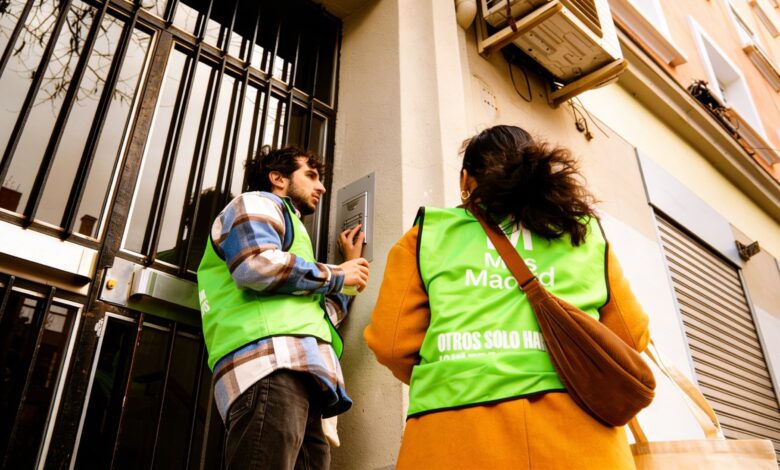
In Madrid, political engagement is taking on new forms: volunteers and left-wing party deputies are going door-to-door to learn what concerns residents. This approach is becoming increasingly prominent amid declining voter turnout and rising competition among parties. For Spaniards, this means that politicians are showing direct interest in their opinions, not just statistics.
As reported by El Pais, around thirty representatives from Más Madrid, including deputies and municipal councilors, gathered in the Arganzuela district. Their task was to visit hundreds of apartments in three hours, find out what residents consider the city’s main problems, and log each encounter in a special app. Importantly, the goal is not campaigning, but gathering opinions: volunteers don’t argue or promote views, they simply listen. This format, known as canvassing, has long been popular in the US and UK, and is now becoming a key tool for the Spanish left.
Tactics and details of the canvassing
Before starting, participants are reminded of four main rules: smile, be honest, begin on the top floors, and avoid arguments. Each pair is assigned a route—three to four apartment blocks where they must knock on every door. If no one answers, they hang a special tag on the handle to notify residents of the visit. Over the course of the morning, more than 750 apartments are covered, and the door-opening rate reaches 38%. Meetings are recorded in the Activisty app, noting who answered, which issues matter to residents, and even contact information for follow-up.
In one of the buildings on Paseo de la Esperanza, volunteers encounter familiar issues: residents complain about high rent prices, difficulties with official registration, and a shortage of affordable housing. These concerns are raised especially often by foreigners, for whom paperwork becomes a real challenge. The same situation arises in neighboring buildings, where people talk about transportation, street conditions, and access to services.
Choice of neighborhoods and residents’ reactions
Más Madrid selects districts for canvassing where left-wing parties previously gained the most support, as well as areas with high voter abstention. According to Assembly member Pablo Padilla, it’s important not only to retain their core supporters but also to win back those who were disappointed or stayed home in 2023. In Arganzuela, for example, around 25% of voters supported Más Madrid in the last election, but that was not enough for victory.
Reactions from residents vary: some are eager to share their problems, while others don’t open the door or express distrust. Some complain about the growth of tourist apartments, which is recorded in the app as a separate issue. In one building, volunteers meet a woman worried about her child’s future, while another pensioner links changes in the neighborhood to the influx of migrants. Despite disagreements, volunteers stick to their principle: not to argue, but to listen and document everything the residents say.
Context and new approaches
In recent years, Spain has seen a growing interest in direct communication between politicians and citizens. This format of public walkabouts has already proven effective in other European countries, such as Germany and Portugal. In Madrid, it is emerging as a response to declining trust in traditional campaigning methods and voter fatigue with political promises. According to El Pais, foreign experts who previously worked on successful elections in New York and Berlin were involved in preparing the campaign.
Meanwhile, other regions of Spain are also experiencing significant changes. For example, Valencia recently recorded a record increase in the number of participants in the traditional Fallas festival, reflecting shifts in civic engagement and residents’ interests. Read more about this in the article on the unexpected surge in Fallas participants in Valencia.
In conclusion, it is worth noting that such initiatives are increasingly in demand amid political uncertainty. Spain has seen an uptick in projects promoting direct dialogue with residents in recent years—from street meetings to thematic forums. In 2025, similar campaigns took place in Barcelona and Sevilla, where volunteers gathered public opinions on urban issues. This approach helps identify the real expectations of citizens and adjust party programs, making politics more accessible to people.