In recent years, Spain has seen a noticeable decline in the number of students attending schools, a trend linked to the ongoing drop in birth rates. Regional authorities have used this situation as an opportunity to revisit the maximum class size regulations. While the Ministry of Education maintains the existing standards, regions across the country are gradually reducing class sizes at various educational levels.
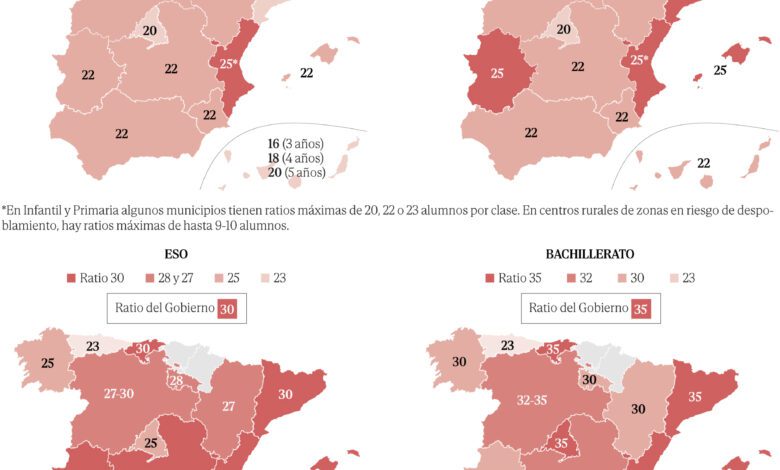
According to the current decree, adopted back in 2010, classes in the second cycle of preschool and in primary school can have up to 25 students; secondary school (ESO) allows up to 30, and senior grades (Bachillerato) up to 35. However, these standards have not been reviewed in the past fifteen years, despite demographic changes and new scientific findings on the impact of class size on education quality.
While the central government is in no hurry to change the regulations, most autonomous communities have already reached agreements with unions to reduce the maximum number of students per class. As of summer 2025, 15 out of 17 regions have set new limits lower than the federal standards. For instance, Galicia now caps class sizes at 20 in preschool and primary, 25 in secondary, and 30 in senior grades. Lower limits have also been introduced in La Rioja and Castilla-La Mancha, while Asturias became the first region to set a uniform standard of 23 students per class at all education levels.
In other regions, such as Cantabria, Extremadura, the Canary Islands, and Andalucía, new rules were agreed upon in 2025. For example, in Andalucía, there is a system where children with special educational needs are counted as two students, further reducing the actual class size. In the Valencian Community and Castilla y León, even lower limits have been set for rural schools and sparsely populated areas—sometimes down to 9–10 students per class.
Even in densely populated regions such as Madrid, Catalonia, and the Balearic Islands, authorities have taken measures to reduce class sizes. This marks a significant policy shift, as previously limits were mainly supported by left-wing parties, while conservative regions opposed them.
Reducing the number of students per class requires not only revising infrastructure but also increasing the number of teachers. Currently, Spain’s education system employs a record number of educators—almost 800,000, which is 120,000 more than ten years ago. This allows for a more personalized approach to teaching and better meets the needs of different student groups.
Recent studies confirm that smaller class sizes have a positive impact on academic outcomes, especially in primary education and challenging social environments. Lower student numbers in a class help reduce disciplinary issues and increase satisfaction among both teachers and students.
However, such a measure requires significant financial investment. Experts estimate that reducing the number of students by one per class nationwide would cost the budget about 1.1 billion euros, as nearly 29,000 new teachers would need to be hired.
The decrease in student numbers at schools is not only linked to demographic decline but also to an increase in the number of foreign students. Over the past ten years, the share of foreign children in schools has risen from 8.6% to 13%. This partly offsets the overall decline in student numbers, especially in lower grades and vocational education.
At the same time, experts warn that in the coming years, the influx of migrants could slow the decrease in student numbers, particularly in primary schools. If the trend continues, schools may soon once again need to increase class numbers and return to the practice of integration groups for children who do not speak Spanish.
For now, regions continue to independently regulate class sizes ahead of decisions by the central authorities. Unions are calling for further action and are demanding concrete proposals from the Ministry of Education to lower the limits. If a compromise is not reached, new protests and strikes are possible at the start of the school year.
Thus, Spain is undergoing an important phase of school system reform, with regions taking the initiative to improve learning conditions by using demographic changes as an opportunity to enhance the quality of education.