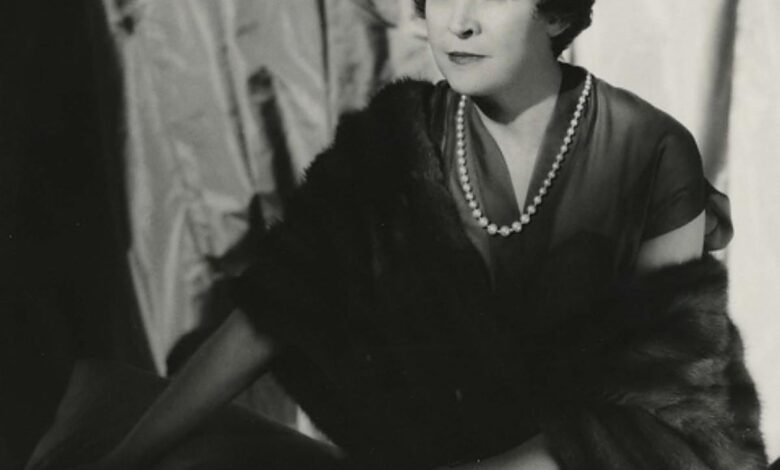
At the beginning of the 20th century in Madrid, Carmen Gurtubay y Alsola was born—a young woman whose destiny could have been a classic example of aristocratic serenity. However, her life turned into a series of dramatic events that not only changed her forever but also redefined perceptions of women’s roles in Spanish history. From childhood, Carmen was surrounded by luxury, educated by governesses, and appeared at high-society gatherings, her name often gracing the pages of glossy magazines. She shone at balls, drove cars, and impressed contemporaries with her passion for sports and travel.
But behind the façade of a carefree life was a woman unwilling to accept a predestined role. After her father’s early death and her mother’s second marriage, Carmen found herself in an even more complex family structure, where titles and connections decided everything. Her first marriage to diplomat Alfonso Merry del Val, held in Washington, quickly ended due to irreconcilable political differences. Carmen increasingly leaned towards leftist views, which irritated those around her and led to ongoing conflicts.
Breaking with the Past
In 1936, on the eve of the civil war, Carmen takes a new step—entering into a civil marriage with Marquis Ángel Fernández de Liencres. This union finally distances her from her family and the aristocratic circle. With the outbreak of war, she leaves Madrid, moves to Barcelona, and then to Paris. There, Carmen becomes not just a supporter of the Republic, but an active participant in the underground resistance. Her energy and determination impress even seasoned politicians and diplomats.
During World War II, Carmen comes into contact with American intelligence services. She passes on critical information about the movement of valuables seized by the Nazis and becomes a surveillance target for German agents. Spanish and Portuguese police detain her repeatedly at the request of foreign intelligence, but each time Carmen manages to get out of difficult situations without losing her composure.
Life in exile
After the war, pressure from the Franco regime intensifies. In 1945, Carmen is forced to leave Spain to avoid arrest. She completely breaks ties with her family, but does not stop her political activity. In Berlin, she takes part in international congresses discussing Europe’s future without dictatorships. Carmen becomes a link between Spanish republicans and monarchists who are seeking a path to democratic change.
In 1948, in Paris, she met John Mackie-Norton, a Canadian who would become her third husband. Their encounter took place at the bar of the Ritz Hotel—a setting worthy of a spy novel. John remembered Carmen as a woman with a piercing gaze and extraordinary inner strength. During these years, she continued working with American intelligence agencies and earned a higher education, graduating from the Faculty of Philosophy and Literature.
The secret of the memoirs
Carmen spent her final years in Paris, where she was called “the Marquise.” She wrote her memoirs, hoping to reveal to the world the behind-the-scenes of war and life in exile. However, after her death in 1959, her mother forbade the publication of these memories. To this day, it remains unknown whether they were destroyed or kept in the family archive. This story is one of the most intriguing mysteries of Spanish aristocracy and espionage in the 20th century.
Carmen Gurtubay y Alsóla was a figure who shattered stereotypes about women of her era. Her biography is not just a chronicle of personal dramas and political intrigue, but an example of how individual choices can change the course of history. She rests in Montparnasse Cemetery in Paris, leaving behind many questions and unfinished stories.
Carmen Gurtubay y Alsola is a Spanish aristocrat whose life became a symbol of inner resistance against the dictates of tradition and political pressure. Her journey from Madrid’s social salons to underground operations in Paris demonstrates how personal courage and conviction can turn an individual into a pivotal figure of their era. Her actions during the Civil War and the postwar period influenced international relations and the lives of many, while her unpublished memoirs continue to captivate historians and readers alike.