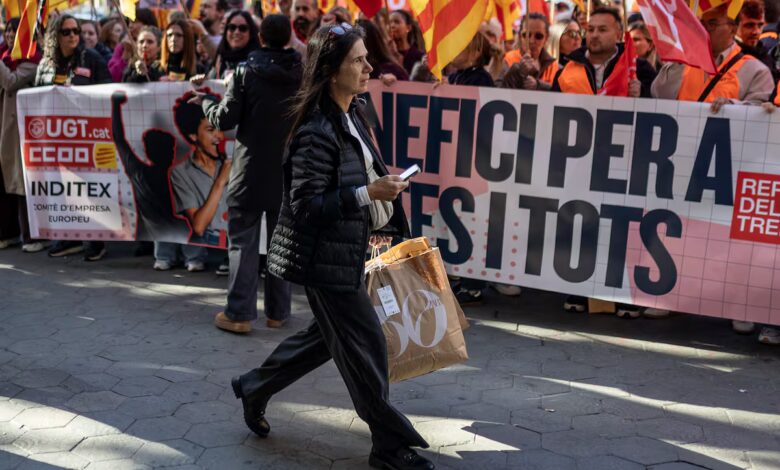
On Friday, as Barcelona’s streets buzzed with pre-New Year sales, the usual stream of shoppers was met with an unusual scene. Dozens of Inditex employees gathered at the entrance of one of the city’s busiest Zara stores at the intersection of Gran Vía and Paseo de Gràcia. Their demands were straightforward: fair participation in sharing the profits that the fashion giant earns each year.
While tourists and locals hurried to take advantage of the discounts, Inditex workers drew attention to another side of the company’s success. They argue that their labor drives record profits, yet they themselves face tough working conditions and low pay. In 2024, Inditex reported a profit of €5.866 billion, a 9% increase from the previous year. Despite this, employees note that their bonuses have been cut and wage growth has virtually stalled.
Protests erupt in Europe’s biggest cities
Demonstrations took place not only in Barcelona but also in Madrid, Lisboa, Paris, Bruxelles, and a dozen other European cities. The organizers—the European Works Council of Inditex—were formed in 2018 to defend workers’ interests across the continent. Protesters did not aim to shut down stores, but their presence did not go unnoticed: shoppers watched in surprise, and some even asked about the reasons behind the staff’s discontent.
Employees point out that they previously received bonuses directly linked to the company’s profits. Before the pandemic, they were paid 500–600 euros per year, which amounted to 2% of total profits distributed among all employees worldwide. Now, this practice has been discontinued, and many consider this unfair given the rising incomes of management and shareholders.
Employee Demands and Company Response
According to union representatives, the workload for staff is only increasing. After Black Friday, they face Christmas sales, then the discount season—all with a demanding schedule and minimal opportunity for work-life balance. Employees are demanding not only the return of bonuses but also a reassessment of the pay system to better reflect each person’s contribution to the company’s success.
Conditions at the logistics centers are no better. For example, employees at Stradivarius, one of Inditex’s brands, note that their base salary is 28,000 euros per year—lower than colleagues in other divisions. They are demanding unified conditions and fair treatment for all workers, regardless of brand or location.
Future Outlook for Further Protests
Unions warn that if talks with management do not yield results, protests will continue. Inditex workers are determined to keep defending their rights, seeking a fairer distribution of profits and improved working conditions. They are convinced that without their daily efforts, the company’s success would not be possible.
For now, most shoppers choose to ignore what is happening and continue shopping as usual. However, protests by Inditex employees are gaining visibility, and the issue of fair income distribution at Europe’s largest companies is once again coming to the forefront.