Internal disagreements within Esquerra Republicana de Catalunya (ERC) have reached a new level as Gabriel Rufián’s efforts to unify the left have extended beyond the Catalan independence movement. This development could reshape Spain’s political landscape, as disputes within a key party may shift the balance of power on the left. Meanwhile, Más Madrid unexpectedly backed its deputy Emilio Delgado, adding intrigue to the contest for leadership among left-wing forces.
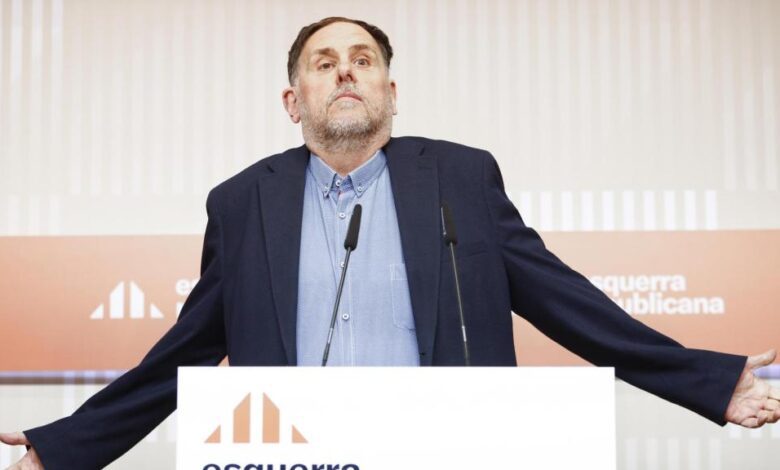
Public criticism of Rufián by ERC president Oriol Junqueras sent a clear signal to the entire party: attempts to create a broad leftist front spark not only discontent but also concerns for the party’s own future. Despite support from some colleagues, Rufián found himself at the center of a conflict that has dragged on for months. His initiative to unite the left beyond Catalan nationalism is seen as a threat to the party’s traditional positions and to Junqueras’s personal influence.
A shift in focus
Más Madrid, in turn, decided to back Emilio Delgado, supporting him at a joint event with Rufián. This move surprised many, as previously Mónica García was considered the sole candidate. Now, there is room for new alliances and fresh faces within the left, which could lead to a redistribution of influence among parties.
Internal disputes within ERC intensified after Rufián began acting independently, without coordinating his actions with the leadership. Junqueras, who had previously restrained his criticism, is now openly expressing dissatisfaction, emphasizing that the party does not intend to dictate terms to other political forces. This statement was seen as an attempt to maintain control over the situation and prevent further division.
New alliances
In Madrid, support for Delgado has united part of the Más Madrid activists around him, especially after he openly challenged the previous leadership. His participation in a public event with Rufián is seen as a step toward forming a new coalition capable of competing with PSOE and other major players. The party leadership is trying to present this as a natural stage of development, although behind the scenes fierce debates about the future direction of the movement continue.
At the same time, the launch of a new left-wing platform is planned for the coming days, which will include Sumar, Comuns, IU, and Más Madrid. It is expected that this platform will become the place where new rules of the game for Spain’s left forces will be determined. Mónica García’s refusal to participate as a candidate paves the way for Delgado and other ambitious politicians ready to take leading positions.
Internal contradictions
Inside ERC, the struggle continues between Junqueras’s supporters and the opposition, which includes former allies of Marta Rovira and Xavier Godàs. The latest elections showed that the party is almost evenly divided, making any attempts at unification extremely challenging. Rufián, aware of his precarious position, is trying to expand his influence beyond Catalonia, but faces resistance both within the party and among allies.
The situation in Más Madrid is no less tense: after Delgado announced his participation in an event with Rufián without consulting the leadership, he had to secure the backing of key party figures. Manuela Bergerot, right-hand woman to Minister García, publicly supported Delgado to avoid accusations of causing a split. This move was seen as an attempt to maintain unity despite clear disagreements.
Prospects for the left
Outwardly, the parties strive to present what is happening as part of a broad process to form a new left-wing coalition for the 2027 elections. However, beneath the facade of unity lie deep contradictions that could lead to new conflicts and unexpected alliances. In the coming weeks, it will become clear whether left-wing forces can agree on joint action or if internal disputes will prevail.
In recent years, Spain’s left-wing landscape has repeatedly become a stage for sharp conflicts and unexpected alliances. The emergence of new platforms such as Sumar and Comuns has already shifted the balance of power, while internal disagreements within major parties have led to leadership changes and strategy revisions. Similar processes have unfolded in other regions, where efforts to unite the left have often been accompanied by struggles for influence and leadership. These events illustrate that Spain’s political dynamics remain highly unpredictable, with any change potentially leading to new power configurations at the national level.