Events in the Middle East have once again taken center stage in Spanish politics. Following recent military actions by the US and Israel against Iran, debate has flared in Spain over how the government is responding to international crises. For Spaniards, this matters not only for foreign policy reasons, but also because such events are used domestically as tools in political disputes.
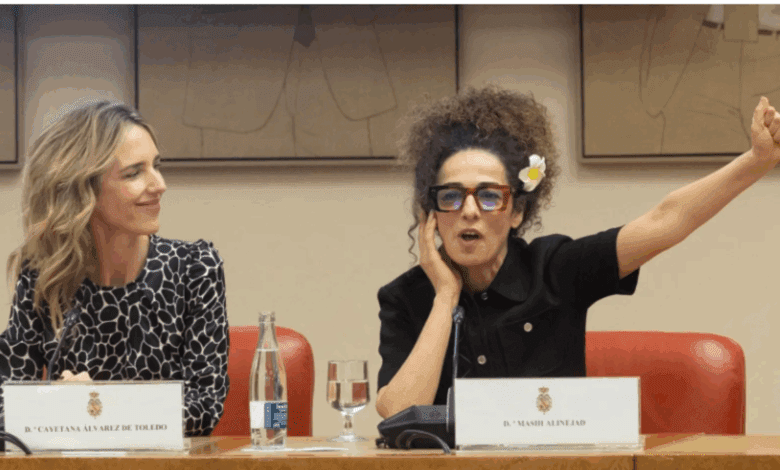
According to El Espanol, Masih Alinejad, a prominent Iranian journalist and human rights activist, sharply criticized the head of the Spanish government. In her view, Pedro Sanchez is using the suffering of the Iranian people as leverage against his political opponents. She stressed that the tragedy in Iran should not become a pretext for political games in Spain, but calls for an honest and principled stance.
Political accusations
Meanwhile, opposition leader Alberto Núñez Feijóo accused Sanchez of turning the slogan “no to war” into a means of scoring political points. According to Feijóo, the government has not only failed to condemn the actions of the Iranian authorities, but has effectively ignored the repression of protesters in Iran. This has sparked widespread discussion in Spanish society, with many demanding a firmer stance from the authorities.
Masih Alinejad, who lives in exile in New York, reminded that the Spanish government’s silence regarding the mass repressions in Iran is perceived as indifference. She believes that the fight for human rights should not depend on the political interests of any party. According to a RUSSPAIN.com source, such statements increase pressure on the government, compelling it to respond to international challenges.
Domestic reaction
In Spain, reactions to Alinejad’s remarks have been mixed. Some support her stance, arguing that Spain should take a more active role in opposing dictatorships and human rights violations. Others believe that intervening in other countries’ internal affairs could harm national interests. In any case, the topic of Iran has sparked new debates about Spain’s role on the global stage.
Recalling recent events, it is worth noting that the European Union had previously faced the need to defend Spain’s interests amid international threats. For example, when the United States announced possible trade measures, Brussels expressed its readiness to support Madrid and the entire EU, as reflected in coverage of the EU’s response to Trump’s statements — Brussels’ position on defending Spain’s interests.
Context and consequences
According to Ale Espanol, the situation surrounding Iran and the response of the Spanish authorities may affect Spain’s relations with other countries and its domestic political climate. The question of whether Spain should take a tougher stance on international issues remains unresolved. For many citizens, it is important that foreign policy does not become a tool for domestic disputes.
In recent years, Spain has repeatedly faced a dilemma: whether to take an active role in international conflicts or maintain neutrality. For example, in 2024, the response to events in Ukraine was debated, and in 2025, the focus turned to the crisis in Venezuela. Each time, government decisions sparked controversy and shaped public opinion. Now, the situation with Iran once again forces Spain to reconsider the balance between principles and pragmatism.