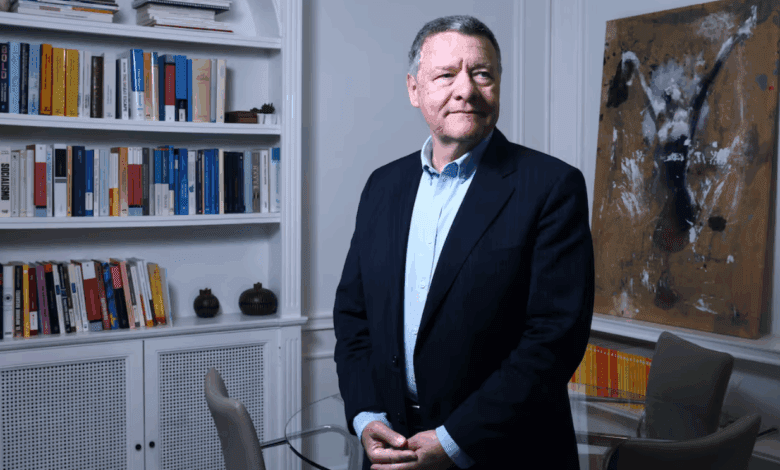
A new conflict is emerging in Spanish politics: former minister and economist Jordi Sevilla has unexpectedly found himself in the spotlight. His manifesto, titled “Social Democracy 21,” has garnered hundreds of responses in just a week and sparked intense debate among both supporters and critics of the current direction of the Spanish Socialist Workers’ Party (PSOE). Sevilla, who once served as a minister under José Luis Rodríguez Zapatero, is now demanding decisive changes from the party and accuses its leadership of pushing the country toward the rise of the far right.
Unlike many critics, Sevilla doesn’t speak in vague terms. He states directly: PSOE has lost its ability for internal dialogue, is no longer an independent force, and no longer serves the interests of society. In his view, the party is too dependent on its current allies and is losing touch with the real problems faced by citizens. He is especially critical of the inability of the two largest political forces — PSOE and the Partido Popular (PP) — to find compromises on key issues such as housing policy.
A challenge for the party
Sevilla’s manifesto is more than just the outcry of a disappointed veteran. It is directed at the party’s youth, whom the former minister urges to take initiative and return PSOE to its social democratic roots. At the same time, Sevilla does not idealize the past or call for a return to the era of Felipe González. He stresses that times have changed, and today new approaches and fresh ideas are needed.
Sevilla pays particular attention to the lack of open debate within the party. According to him, official critics prefer to remain silent, while the leadership ignores any attempts to discuss alternative viewpoints. In the former minister’s opinion, this leads to stagnation and a loss of trust among voters. He also notes that PSOE’s current course not only fails to solve existing issues, but actually aggravates them, paving the way for the rise of radical movements.
Criticism and proposals
Sevilla is not afraid to address uncomfortable topics. He openly states that the government’s policy of raising pensions and the minimum wage does not take into account the interests of the most vulnerable groups—especially young workers in precarious employment. In his view, such measures merely cover up the real problems without offering long-term solutions.
At the same time, the former minister does not rule out cooperation with nationalist parties such as EH Bildu and ERC if necessary to achieve shared goals. However, he is categorically opposed to rapprochement with the Partido Popular, which he accuses of shifting to the right and refusing to engage in dialogue. Sevilla likens the current situation to the Titanic disaster: while the far right is gaining strength, PSOE is losing ground and risks being left behind.
Looking to the future
Despite harsh criticism, Sevilla emphasizes that he is not personally opposed to Pedro Sánchez. He acknowledges the current leader’s role in modernizing the party but believes that concentrating power in one person’s hands is dangerous. In his view, the lack of internal democracy and open discussion leads to mistakes that harm not only the PSOE but the entire country.
Sevilla is particularly concerned about the rise of far-right movements. He attributes this trend to growing disenchantment among young people, who see no prospects for themselves and find no answers to their problems within the current political system. According to the economist, only a return to genuine social democracy and a willingness to engage in dialogue can halt this dangerous trend.
Historical context
Sevilla makes no secret of his commitment to republican values, but urges people not to dwell on the symbols of the past. He believes the fight against the right should not focus on disputes over the legacy of Francoism, but on strengthening democratic institutions and seeking the kind of compromise that allowed Spain to achieve stability after the dictatorship.
In conclusion, Sevilla notes that despite all the shortcomings, Sánchez’s era brought renewal and new faces to the party. However, without real changes and a return to the principles of open dialogue, PSOE risks losing the public’s trust for good. The internal party debate sparked by Sevilla’s manifesto has already become one of the most talked-about events in Spanish politics at the start of 2026.