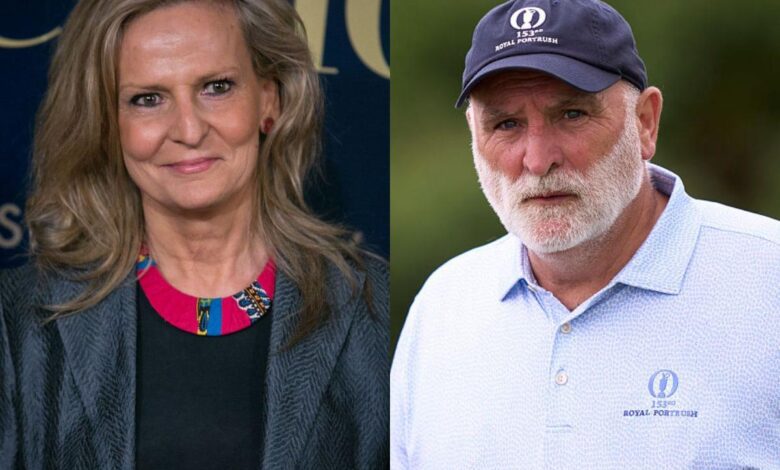
In early December, renowned Spanish journalist Isabel San Sebastián tried to spend an evening at Nubeluz, a restaurant owned by celebrated chef José Andrés. However, she and her party were denied entry. The reason was footwear: with freezing temperatures outside, the guests were wearing boots that did not meet the establishment’s dress code. The incident quickly escalated beyond a private dispute and became a topic of public debate in Spain.
San Sebastián did not stay silent and voiced her outrage on social media. She addressed Andrés directly, accusing him of being overly strict and even of class-based discrimination. According to her, the temperature in New York that evening had dropped to minus seven, and the request to change shoes seemed, to put it mildly, odd. The journalist pointed out that Andrés often speaks about solidarity and simplicity, yet believes that his venue exudes an air of elitism.
The chef’s response
It took almost a month before José Andrés decided to respond publicly to the criticism. His reply was polite but firm. He apologized for the unpleasant situation but emphasized that the rules at Nubeluz apply to everyone. Andrés noted that the same hotel also houses two of his other restaurants — Bazaar and Zaytinya — where the dress code is far more relaxed. According to him, Nubeluz is a special place, and its dress code is upheld to maintain its atmosphere and image.
The chef added that he is always happy to welcome guests at his other establishments, where no one pays attention to footwear. He promised to personally ensure that next time, San Sebastián and her companions will be received with the utmost care. However, the apology did not change the fact: Nubeluz enforces strict rules that will not be bent even for celebrities.
A Dress Code Without Exceptions
The official Nubeluz website explicitly states that guests must wear elegant, cocktail attire. The list of banned items includes sportswear, leggings, tank tops, baseball caps, flip-flops, and shoes like Crocs or Uggs. Visitors who do not meet these requirements may be asked to change or return another time. For New York, where restaurant competition is fierce, such restrictions are not uncommon, but not everyone is willing to accept them.
In Spain, the incident sparked a heated debate. Some sided with San Sebastián, arguing that rules should be more flexible, especially in extreme weather. Others supported Andrés, noting that every restaurant has the right to set its own standards. The question of where style ends and discrimination begins remains unresolved.
Public Reaction
The shoe scandal quickly became a topic for memes and debate in Spanish media. Many social media users mocked the situation, likening Nubeluz to exclusive clubs for the elite. Some even recalled other instances when celebrities faced unexpected dress codes at high-end venues.
José Andrés himself, despite apologizing, did not change the restaurant’s policy. He made it clear that preserving the atmosphere and reputation of Nubeluz is more important to him than pleasing individual guests. However, his willingness to personally intervene in the conflict and offer an alternative shows that the chef cares about public opinion and knows how to handle criticism.
A Spanish Perspective
For Spaniards, this story has sparked reflection on the boundaries of hospitality and how standards in fine dining are evolving. In a country where simplicity and openness are traditionally valued, such incidents feel particularly sensitive. Still, perhaps situations like this are shaping new rules of the game—not just in New York, but in Madrid, Barcelona, and Valencia as well.