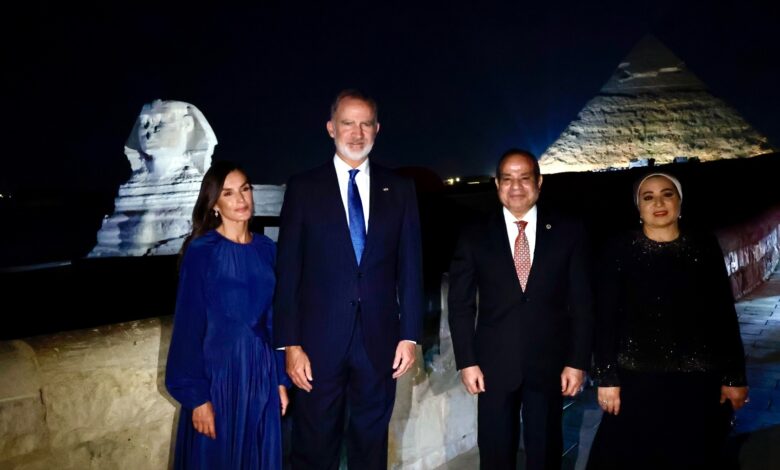
The visit of the Spanish monarchs to Egypt this year was rather unusual. Against the backdrop of heightened tensions in the Middle East, the official program was noticeably shortened, and the customary pomp gave way to a more reserved atmosphere. Instead of the traditional lavish dinner, only a daytime reception appeared on the schedule. However, after the official part concluded, King Felipe VI and Queen Letizia accepted President Abdel Fattah el-Sisi’s invitation to a private dinner at the Mena House hotel, located right across from the famous Giza pyramids.
Such a gesture from the Egyptian leader is extremely rare. One of the country’s most iconic landmarks was chosen for the meeting, highlighting the special regard shown to the Spanish delegation. In an intimate setting over dinner, the president’s wife joined the monarchs. After the meal, the Spanish royal couple decided not to miss the opportunity and took a night stroll to the Pyramid of Khufu and the Sphinx. They were accompanied by the head of the archaeological zone, who gave the guests a brief tour.
It is worth noting that the architectural monuments of Giza have gained special nighttime illumination in recent years thanks to Spanish specialists. The company Isdefe, with support from other national organizations, implemented a lighting project for the pyramids, marking a significant Spanish contribution to the preservation of Egypt’s cultural heritage. Now, these ancient structures shine in a new light, a detail that did not go unnoticed during the visit.
The flags of Spain and Egypt had been flying for several days at the foot of the pyramids, hinting at the possible arrival of distinguished guests. Although the nighttime tour was not on the official agenda, earlier in the day the king suggested that he dreamed of seeing the pyramids at sunset. The very next day, the monarchs will head to Luxor to visit another project for the security and lighting of archaeological sites, implemented by Spanish companies. Specifically, this refers to the ongoing modernization and preservation work at historic sites by the same company, Isdefe.