Luis de Guindos, Vice President of the European Central Bank (ECB), has voiced concern over the situation in Spain’s real estate market. In his view, the main issue lies in the current legislation, which artificially restricts the supply of rental housing and, as a result, is fueling an unrestrained surge in prices.
At the same time, he noted that the Spanish economy is demonstrating resilience and is capable of growing at a pace that outstrips the eurozone average. He attributed this to two fundamental factors: a sound financial system and the high competitiveness Spain has achieved over the past decade.
Economic Strengths and Political Risks
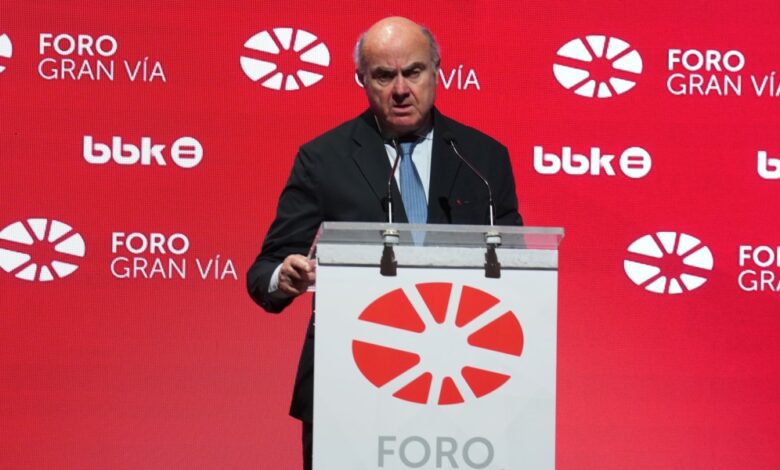
During his speech at the Gran Vía Forum, de Guindos gave a detailed overview of Spain’s economic situation. He emphasized that its main strengths are a stable banking sector and strong competitiveness in foreign markets. A significant leap forward in this area was made after the 2013 labor reform, as clearly reflected in export data. Spain managed to shift from a chronic current account deficit to a surplus, marking an important achievement.
According to the ECB Vice President, maintaining these two pillars—financial stability and competitiveness—is a top priority for the future. They are what enable the country’s economy to grow at around 3%, significantly outpacing the eurozone forecast of 1.3%. Additional growth drivers include the tourism sector, although its momentum is gradually slowing, and revenues from the EU’s Next Generation funds, the effective use of which still raises some questions.
When asked about the political situation, de Guindos declined to comment on Spain’s lack of an approved budget, citing a reluctance to interfere in the internal affairs of member states. However, in a broader European context, he acknowledged that political instability and difficulties in passing budgets are among the major risks complicating the implementation of necessary fiscal adjustments.
Demographic challenge and the housing issue
De Guindos named a significant increase in population—now approaching 50 million—as one of the key factors driving Spain’s economic growth. Immigration plays a leading role in this trend. He emphasized that against the backdrop of Europe’s current demographic situation, and particularly in Spain, an influx of migrants is both absolutely necessary and inevitable.
At the same time, he clarified that immigration should be orderly, aimed at attracting specialists with the required profiles and eliminating the activity of illegal human trafficking networks. It’s essential to maximize the benefits of this process and minimize potential costs. The most obvious cost today, he said, is the housing issue. The sharp increase in the number of households due to population growth is putting enormous pressure on the real estate market.
Regulation as a Brake on the Rental Market
De Guindos explained that, first and foremost, the increased demand should be absorbed by the rental market, since new construction always responds with a certain delay. But this is where the root of the problem lies. “Regulation restricts the supply of rental housing,” he said. The logic is simple: when demand rises sharply and supply cannot respond adequately due to legal barriers, rental prices inevitably soar. This, he believes, is the fundamental challenge facing Spain’s real estate market right now.
Responding to a question about the risk of a new “bubble” in the real estate market, the ECB Vice President noted that the current situation is fundamentally different from the 2008–2011 crisis. Back then, rapid price growth was accompanied by a “credit bubble”—an uncontrolled surge in mortgage lending, which ultimately led to the collapse of the financial system. Now, although housing prices in some cases have already surpassed pre-crisis peaks, there is no sign of a lending boom. Financing is available and banks are issuing loans under reasonable terms. The issue is not a lack of money, but rather regulations that prevent the rental market from serving as a “shock absorber” for demographic fluctuations.