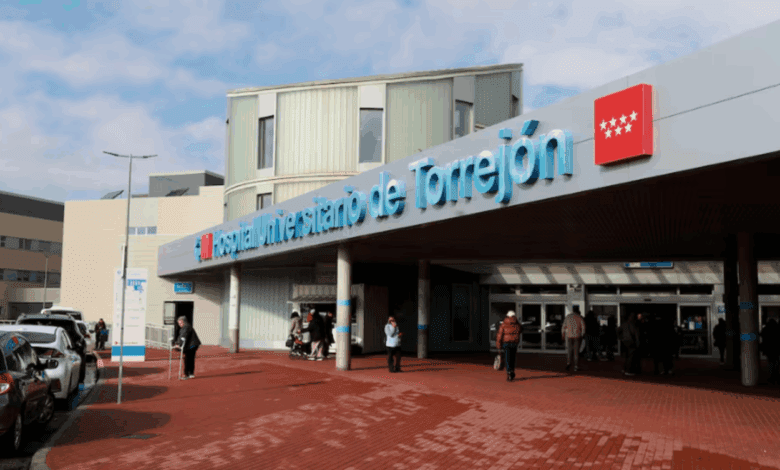
A new round of controversy has erupted in the Community of Madrid over the management of Torrejón Hospital after regional authorities refused to support an initiative to establish a special commission to investigate the activities of the Ribera Salud group. The debate was sparked by audio recordings in which the company’s head urged staff to prioritize financial interests over patient needs, especially when treatment comes at a higher cost.
The idea to create the commission came from Más Madrid deputies, who insisted on the need for a thorough review of all decisions made by the hospital’s management. In their view, the issue is not only about possible violations at the medical institution, but also concerns the fundamental question of oversight over the quality of care provided within the public-private partnership model.
Despite the seriousness of the allegations, members of the ruling party categorically opposed any further investigation. They did not explain their reasoning, merely stating that it was “inappropriate” to proceed with the review.
What’s at stake
In December last year, Más Madrid deputies officially appealed to the regional parliament to set up a commission to examine how Ribera Salud’s decisions had affected the quality of medical care. The appeal emphasized that the company’s management allegedly gave directives to manipulate waiting lists based not on medical indications, but on economic considerations.
The report also noted that the hospital had recorded instances where staff were told not to use certain treatment methods for patients outside the main assigned group, as well as to reuse single-use medical supplies. Some managers who refused to follow such orders were dismissed.
According to the plan, the commission was to include representatives from all parliamentary factions and analyze all inspections, audits, and budget allocations related to Ribera Salud’s operations in recent years. The commission was scheduled to present its findings by the summer of 2026.
Authorities’ response
However, just days after the request was submitted, representatives of the ruling party sent a letter to parliament demanding a vote to block the commission’s creation. The authorities explained their position by saying that previous audits had found no violations and that the hospital itself demonstrated strong performance.
Regional Health Minister Fátima Matute publicly stated that the inspection results confirm the hospital’s effectiveness, and that the public-private partnership model is yielding positive results for the region’s healthcare system.
Nevertheless, the opposition and part of the medical community believe that such statements do not resolve concerns about transparency in management and the actual quality of medical care. In their view, the fact that audit results are not published only heightens suspicions.
Opposition views
Lawmakers from left-wing parties insist that the controversial audio recordings only confirm the concerns raised by hospital staff long before they became public. In particular, they point to attempts by management to change the approach to forming waiting lists and increase revenues by serving patients who are not in the primary attached group.
In April and May 2025, hospital staff had already appealed to the authorities complaining about artificially prolonged hospitalizations aimed at increasing funding. These complaints were voiced at meetings of specialized committees, but according to the opposition, they did not receive due attention from responsible officials.
Más Madrid emphasizes that, despite private management, the hospital is part of the public healthcare network, meaning regional authorities are obliged to ensure transparency and quality control. According to them, however, the results of regular inspections are not published, which makes it impossible to objectively assess the situation.
Political implications
The opposition believes that the refusal to create the commission is tied to the authorities’ desire to conceal details about the operation of the public-private partnership model in healthcare. According to Manuela Bergerot, a representative of Más Madrid, the ruling party consistently blocks any attempts by the opposition to initiate investigations in this field.
She also recalled other instances when similar initiatives were not supported, including those concerning the activities of the region’s largest private healthcare companies. In Bergerot’s view, such policies lead to a decline in the healthcare system and growing public discontent.
At the same time, government representatives continue to insist on the chosen model’s effectiveness and emphasize that all necessary inspections have already been carried out. They believe that further investigation will not yield new results and will only distract from real issues.