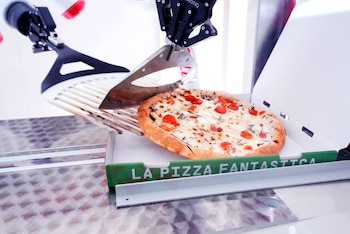
In the heart of Madrid, on Gaztambide Street, a new spot is preparing to open its doors—one that’s already stirring debate and curiosity. The French chain Pazzi has decided to bring its unique concept to Spain: a fully automated pizzeria where humans are only guests, and every other role is handled by machines. Set to open in 2026, this venture promises not just another fast food outlet, but a true technological experiment for the city’s residents to witness.
Inside the future pizzeria, you won’t find a single chef, waiter, or even a cleaner. Every step—from mixing the dough to packing your order—is carried out by robots. Customers place orders on touchscreens, then the show begins: mechanical arms deftly roll out dough, add toppings, send pizzas into the oven, and, within minutes, serve up the finished dish. All of this happens around the clock, with no breaks or days off.
Technology in Service of Taste
The project’s creators claim their robots can make up to 80 pizzas per hour, with wait times never exceeding five minutes. For a metropolis where the pace never slows—even at night—this sounds like a lifesaver for hungry students, office workers, and anyone used to eating on the go. But it’s not just about speed—quality is equally important. Pazzi’s recipes are crafted by French world pizza champion Thierry Graffagnino, and ingredients are sourced from renowned European suppliers.
The dough is made using a signature recipe that remains a closely guarded secret. The sauce features tomatoes from the Italian company Cirio, while toppings—from cheese to meat—arrive frozen to preserve their freshness. The pizzas are baked in a stone oven, which seems almost ironic given the high level of automation. Owners of the new venue promise guests a fusion of tradition and cutting-edge technology.
A New Reality
The technical aspect is handled by Brazilian company Pibra, which specializes in industrial automation solutions. Their goal is to ensure that the cooking process is not only fast, but also impeccably clean. At a time when many restaurants face staff shortages and rising costs, this model looks particularly attractive—especially for neighborhoods where it’s hard to find something fresh and tasty at night.
Of course, there are skeptics. Some worry that such establishments will push people out of the service sector, and that machine-cooked food will lose its soul. But the founders of Pazzi insist their aim is not to replace humans, but to make quality pizza available anytime and anywhere it wasn’t possible before. Judging by the awards the chain has received—from the Foodtech prize to a global innovation award in the restaurant industry—they stand a real chance of changing the way people think about fast food.
A Test for Madrid
The opening of a pizzeria in Chamberí is more than just launching a new business—it’s a unique test for the city. Can Madrid embrace the idea of robots taking full charge of the food? Or will residents of the capital still prefer the classic pizza made by a human chef? We’ll find out the answer very soon.
For now, all we can do is watch as technology gradually changes our familiar rituals. And perhaps in a couple of years, the late-night pizza line will form not at a window with a smiling Italian, but at a machine that never tires or makes mistakes. Time will tell how appealing and popular this approach turns out to be.