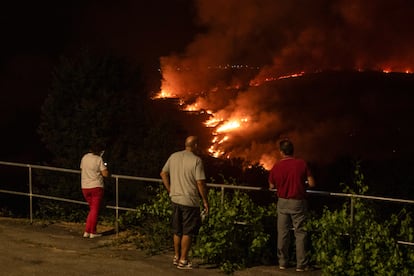
Several regions of Spain continue to face a challenging situation due to large-scale wildfires. In recent days, the flames have spread across thousands of hectares, forcing more than 5,000 people to spend the night away from their homes. The disaster has already claimed two lives, and the number of those injured continues to rise.
The situation is particularly severe in the provinces of León and Zamora, where the fires remain out of control. In León, residents of 23 localities—about 4,300 people—were evacuated due to a fire in the area of Molezuelas de la Carballeda. A volunteer who participated in fighting the fire lost his life in the same area.
In Zamora, efforts continue to contain a blaze in the Puercas area, where six people have been injured, two of whom are in intensive care. In Galicia, in the municipality of Chandrexa de Queixa (Ourense), over 3,500 hectares of forest have been destroyed by fire. Additional units, including the Military-Environmental Service, have joined firefighting operations.
In Castilla-La Mancha, a wildfire remains active in Navalmoralejo, having spread to the province of Cáceres. Additionally, a new fire broke out in Calera y Chozas, forcing 5,000 residents of Alberche del Caudillo to remain indoors and leading to the temporary closure of two roads.
Authorities report that the fire in the Tarifa area has been stabilized, but the situation remains tense in other regions. Firefighters and emergency services continue to work around the clock to contain the fire sources and prevent further spread.
Prolonged heat, drought, and strong winds—factors contributing to the rapid spread of the fire—are cited as the main causes of these large-scale wildfires. Authorities urge residents to take precautions and follow the instructions of emergency services.
Experts note that the current wildfire wave is among the most destructive in recent years. High temperatures are expected to persist in the coming days, which could hamper firefighting efforts and increase risks for the population.
The situation in the affected regions remains under close scrutiny from local and national authorities. Additional personnel and equipment are expected to be deployed to the most dangerous areas to accelerate firefighting operations and provide assistance to evacuated residents.