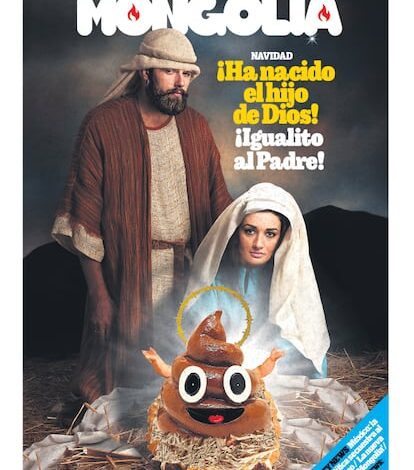
A high-profile trial in Mataró (Barcelona province) involving the satirical magazine Mongolia has concluded. The judge of Investigating Court No. 4 has closed a case that had dragged on since late 2022. The lawsuit was sparked by a magazine cover showing, instead of the traditional baby Jesus in a nativity scene, a cartoon character depicted as a brown lump with eyes, a smile, and a crown. This illustration sparked outrage among several conservative organizations, who saw it as an insult to religious sentiments.
Hazte Oír became the last of four organizations to seek punishment for the editorial team. Previously, similar complaints had been filed by Manos Limpias, Abogados Cristianos, and Comunión Tradicionalista Carlista, but after the court dismissed their cases, they chose not to appeal. Hazte Oír, however, continued the fight, insisting that the publication violated the penal code and degraded Christian values. The judge, though, ruled that the case had already been reviewed and found no criminal offense.
From the outset, the editors of Mongolia claimed their work was not a mockery of believers but a form of social critique and artistic expression. They argued that even if the image seemed provocative, it remained within the boundaries of free speech and creativity protected by the constitution. The prosecution supported this view, finding no evidence of intentional offense in the magazine’s actions.
Interestingly, during the proceedings, two of the three editors of Mongolia were summoned for questioning, while the third was supposed to appear in Madrid, but the case was closed before that happened. The court noted that after three previous refusals to open a criminal case, there were no grounds to continue the investigation. The court’s decision on October 2, 2024, became final, as the other plaintiffs did not appeal.
It is worth noting that the wave of lawsuits against Mongolia began after public calls from one of the Vox party leaders, who suggested filing complaints against the magazine. Despite the pressure, courts in Barcelona and Mataró concluded that the publication did not intend to insult believers but used satire to express an opinion on religious dogma. In response, Mongolia launched a fundraising campaign for legal defense and filed a countersuit against one of the organizations for false accusations.
This case has once again raised the question of the limits of free speech and the permissibility of satire in Spain. The court’s decision could set a precedent for future cases involving criticism of religion in art and media.