The scandal surrounding the so-called ‘patriotic police’ has once again taken center stage following the admission of Antonio Hernando, who serves as Secretary of State for Telecommunications. His testimony could influence public perception of law enforcement and political intrigue in Spain. Questions about transparency and the legality of actions concerning senior officials are gaining momentum amid new revelations.
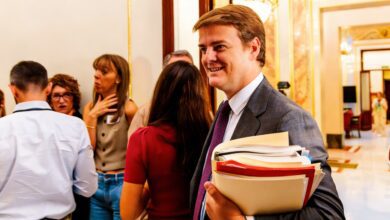
Hernando testified in court, confirming that in April 2024 he met with Leire Díez, a former member of the PSOE. According to him, at the meeting Díez offered information regarding investigations conducted by the ‘patriotic police’ against Prime Minister Pedro Sánchez and his family. This information concerned surveillance and attempts to undermine Sánchez’s reputation amid fierce political rivalry.
Judicial proceedings
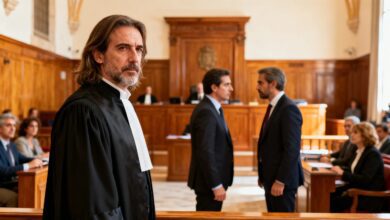
That same day, former PSOE Secretary of Organization Santos Cerdán was also spotted at the courthouse. Both were called as witnesses in a case where Díez and businessman Javier Pérez-Dolset are suspects. Investigators believe that they may have been involved in efforts to discredit anti-corruption investigators and manipulate cases affecting politicians and business figures.
Judge Arturo Samarriego, who is leading the investigation, seeks to determine exactly what was discussed at the meetings between Díez and Pérez-Dolset with party representatives. According to Hernando, he arrived at the court early in the morning to avoid press attention and spent several hours waiting for questioning, without communicating with Serdán. He clarified that the meeting was organized by the organization secretariat and took place at headquarters on Ferraz Street. In addition to him, Ion Antolín, Juan Francisco Serrano, Serdán, Díez, and Pérez-Dolset were present. The latter left the meeting twenty minutes after it began.
Meeting agenda
During the conversation, actions by the ‘patriotic police’ aimed at surveilling Sánchez and his inner circle were discussed. According to Hernando, Díez did not make any demands or request compensation for the information provided. After the meeting, he contacted the party’s lawyer, and the collected materials were handed over to the National Court, though the judge did not attach importance to them. Hernando also noted that he did not inform the leadership about the details of the meeting.
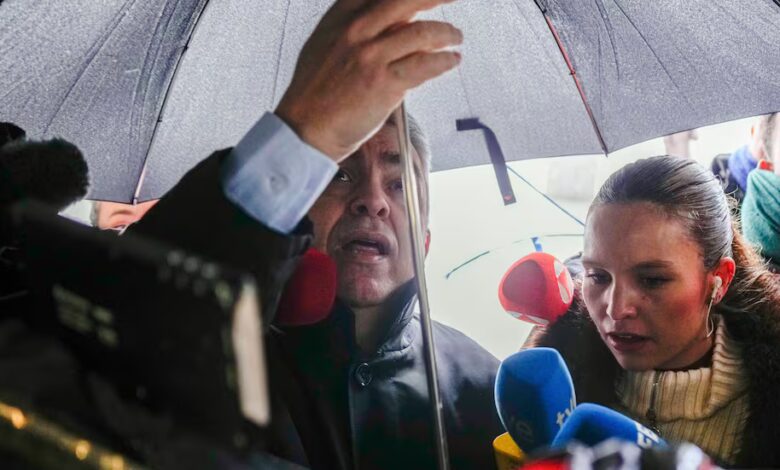
As Hernando left the courthouse, he was met by employees chanting slogans expressing dissatisfaction with the judicial system. This added emotional intensity to an already tense situation.
Participants’ testimonies
Leire Díez had previously confirmed that she met with Serdán in April 2024 at the PSOE headquarters. Pérez-Dolset also acknowledged his participation in these meetings, stating that the purpose was to present evidence of ‘deep state’ activities against them. He clarified that Hernando was present at one of the meetings while serving as deputy chief of staff for the government.
Investigators are also examining other contacts Díez had with entrepreneurs and prosecutors in 2024–2025. She claims she acted as an independent journalist; however, in one recording she said she was appointed by the party to investigate the activities of the ‘patriotic police’ and judicial structures, also calling herself Serdán’s ‘right-hand’.
Context and Consequences
The story of the ‘patriotic police’ has repeatedly sparked outrage in Spanish society. In recent years, the country has seen numerous cases emerge involving surveillance of politicians and attempts to manipulate investigations for the benefit of certain groups. One can recall high-profile trials against former Ministry of the Interior officials accused of abuse of power and fabricating cases against the opposition. Such scandals consistently lead to public debates about the transparency of government institutions and the need for reforms in law enforcement. Each new episode adds to the political tension in the country and prompts reflection on the limits of what is permissible in the struggle for power.