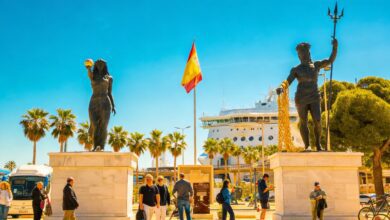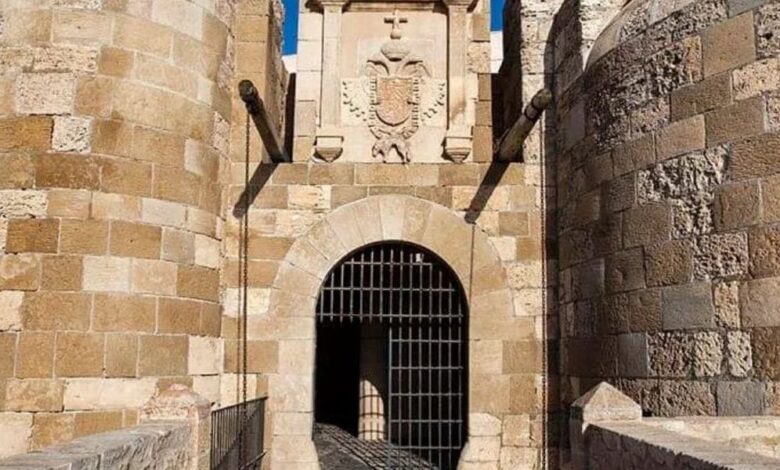
In the north of Africa, at the heart of the ancient fortress of Melilla, stands a unique architectural monument — the only Gothic chapel on the entire continent. It’s easy to miss for a casual passerby: the entrance is hidden in a maze of old tunnels, and the chapel itself lies concealed behind a massive 16th-century door. This is a place where history literally goes underground and every stone preserves traces of bygone eras.
The Capilla de Santiago is located within the first fortified belt of Melilla la Vieja, between the tunnel and the Santa Ana gate. Inside, you’ll find vaulted Gothic ribbed ceilings, original masonry, and a sculpture of the saint on horseback. All this creates the atmosphere of a secluded medieval sanctuary that has weathered many storms and remains intact to this day.
The history of the underground chapel
The chapel’s origins are linked to the engineer Miguel de Perea and master Sancho de Escalante, who built this small sanctuary in 1551 right at the entrance to the fortress. Here, travelers and defenders of the city could find shelter and pause for prayer before entering the city or heading out to defend its walls.
In the 17th century, the chapel’s interior was transformed: a new altar was installed and a statue of the saint was brought here from the Iglesia de la Purísima Concepción. This strengthened the bond between the city’s military and spiritual life. Over the centuries, the chapel survived earthquakes, reconstructions, and restorations. In the mid-20th century, it was restored to its historic appearance, with later additions removed to reveal Gothic details.
Defensive structures and underground galleries
Surrounding the chapel is an entire complex of defensive structures. In the 16th century, the moat by the gate was deepened almost to sea level, and the entrance was made winding to make attacks more difficult. Underground passages, stretching for about five kilometers, connected different parts of the fortress and served for the supply and protection of the city. Here you can see casemates, old cannons, and observation galleries that once overlooked the sea and shore.
Over the years, the fortifications were rebuilt: new towers appeared, artillery positions were added, and the walls were reinforced. But the chapel always remained an intimate space where military might coexisted with silence and prayer.
How to Visit the Chapel of Santiago
Today, this unique temple is open to visitors. In winter, the doors are open from Tuesday to Saturday, 10:00 to 13:30 and 16:00 to 20:30, and on Sundays from 10:00 to 14:00. In summer, the afternoon hours are extended until 21:30. Monday is a day off.
The chapel is part of the Melilla la Vieja tour route, where you can see not only religious monuments but also military fortifications and enjoy views of the Mediterranean Sea. For those who want to learn more, group and individual tours are available, which include visits to the underground galleries. You can book by phone or email, but it’s best to check the schedule and prices in advance.
The Santiago Chapel is not just a historical landmark, but a true symbol of the city—a place where past and present meet beneath the arches of an ancient church hidden from most tourists.