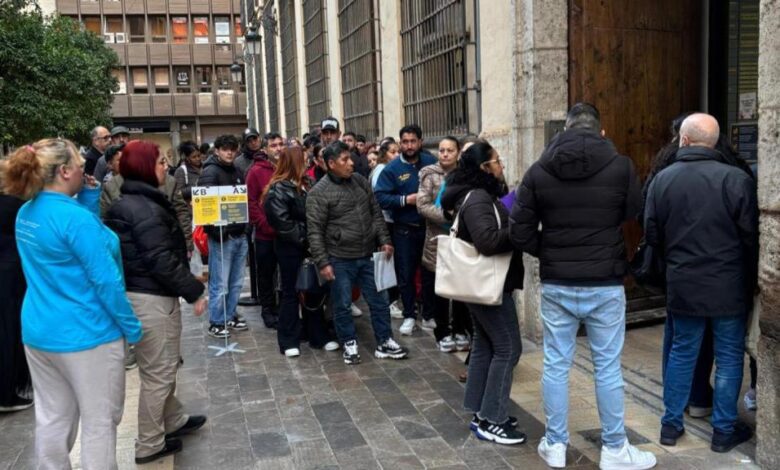
Interest in legalization among Moroccan migrants in Spain has surged. This is directly linked to the recent streamlined registration campaign launched by the Spanish government. For thousands of families and workers, especially in regions with high numbers of foreigners, the opening of consulates on weekends has become a real opportunity to change their status and gain access to legal employment and social protection.
Moroccan consulates across the country have switched to an enhanced work schedule. Now, their doors are open not only on weekdays, but also on Saturdays, Sundays, and even during holidays. This measure aims to handle the huge influx of applications for the documents required for legalization. Moroccan authorities and embassy staff in Madrid have deployed additional resources, are considering launching mobile offices, and demand full staff readiness to work at any time.
Emergency measures
In Murcia, where the Moroccan diaspora is the largest among foreign residents, the consulate now operates on weekends as well. In Barcelona, since late January, services are available on Saturdays, but only by appointment. Other regions are also introducing new schedules so that everyone can submit documents smoothly and without long queues. Special emphasis is placed on warning against fraud: consulates officially state that turning to dubious intermediaries is unacceptable and urge people to use only official channels.
The Moroccan authorities emphasize that the current situation is a unique opportunity for those who have lived in Spain without documents for a long time. Obtaining certificates of no criminal record, validating documents, consultations on integration issues—all of this is now available in an expanded format. For many migrants, this is a chance not only to obtain legal status but also to reunite with their families, gain access to medical care, and find official employment.
Reaction and consequences
The surge in consulate applications has made it necessary to urgently rethink service approaches. In some cities, such as Alicante, the large crowds have forced authorities to call in the police to maintain order. Authorities in Spain and Morocco are coordinating efforts to prevent such situations from recurring and to ensure the safety of applicants.
Alongside the Moroccan initiative, Algeria has also announced support measures for its citizens abroad. The president has signed a decree allowing Algerians with unresolved status or minor offenses to apply to consulates for legalization or repatriation. This decision concerns those who have found themselves in a difficult situation abroad and need assistance in regularizing their status.
European context
The issue of migrant legalization in EU countries always sparks lively debates. While each country defines its own migration policy, Brussels insists on taking the interests of the entire Schengen Area into account. In the coming days, the European Parliament is set to discuss Spain’s legalization campaign and its potential consequences for security and migration flows in the region.
In Spain, such measures are met with mixed reactions. On one hand, they help reduce the shadow labor market and improve migrant integration. On the other hand, there are concerns about a potential increase in illegal migration and added pressure on social services. Nevertheless, for thousands of people, this is a real chance to start a new life without fear of deportation.
Background and context
In recent years, Spain has already faced waves of migrant legalization. For example, in the early 2000s, a mass amnesty allowed hundreds of thousands of foreigners to obtain documentation and leave the shadows. Such campaigns have always been accompanied by a surge in consular applications, long lines, and the urgent need to expand staff. In 2023, similar measures were implemented in Italy and Portugal, where there was also a sharp increase in legalization requests. Practice shows that such decisions significantly impact the labor market, the degree of integration, and social stability in host countries.