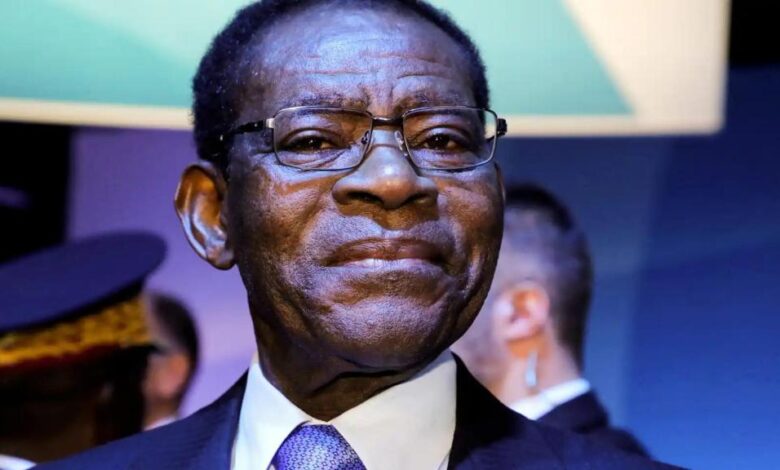
Scandal surrounding Equatorial Guinea’s president Teodoro Obiang is directly impacting Spanish society. At the heart of the matter is a legal case in Valencia, addressing not only questions of personal honor but also how political conflicts shape international relations. For Spain, home to a significant African diaspora, such proceedings highlight how internal disputes in former colonies can affect daily life in the country.
Teodoro Obiang, who has led Equatorial Guinea since 1979, has filed a lawsuit against Orlando Cartagena, a Valencia resident and self-proclaimed prime minister of Annobón island. The case stems from Cartagena’s public allegations that Obiang supposedly practices cannibalism and engages in witchcraft. These statements were made in interviews and widely circulated in the media, which, according to the president’s lawyers, caused serious harm to his reputation.
Legal showdown
In the Valencia courthouse, both sides attempted to reach an agreement, but negotiations failed. Now, Obiang is demanding one million euros in damages for defamation, along with a public retraction and removal of all accusatory content from social media. He is represented by former Spanish judge Javier Gómez Bermúdez, who also defends the president’s son, Carmelo Ovono Obiang, a key figure in another high-profile case involving abductions and torture.
Cartagena, who lives in the suburbs of Valencia, stands by his statements. He claims that his allegations are based on reports in foreign media and statements from opposition politicians. Similar accusations against the Obiang regime have previously been voiced in the British press and on Spanish radio. Cartagena himself believes the lawsuit against him is an attempt to pressure and intimidate him, driven by political motives.
Political context
The authorities of Equatorial Guinea do not recognize Cartagena as the Prime Minister of Annobón and deny any claims by the island to independence. Official documents submitted to the court emphasize that no country in the world supports such demands. Obiang’s lawyers insist that Cartagena’s accusations go beyond acceptable limits and aim to discredit the head of state, especially in a country with deep-rooted Catholic traditions.
The lawsuit also notes that the requested compensation will be used to improve the lives of Equatorial Guinea’s citizens. At the same time, the president’s defense categorically denies any accusations of murder or cannibalism, particularly regarding children. The demand to remove all references from the public domain remains a matter of principle.
Reaction and consequences
After a failed attempt at reconciliation, Cartagena issued a statement calling the lawsuit politically motivated and aimed at restricting freedom of speech. He reminded the public that Obiang remains one of the world’s longest-serving leaders, and his regime is often accused of brutality and human rights violations. In Spain, this case triggered widespread public interest, as it raises questions about freedom of expression and the boundaries of permissible criticism.
Scandals involving African politicians and their inner circles are not uncommon in Spanish courts. For example, there was previously public attention on an investigation related to the transport of hazardous cargo between Madrid and Malabo—details of this story can be found in the article about the investigation into the scheme to bypass controls on Madrid-Malabo flights. Such cases highlight how closely intertwined political and legal issues can be between Spain and its former colonies.
In recent years, Spanish courts have increasingly dealt with lawsuits concerning the protection of honor and dignity, especially when it comes to public accusations against foreign politicians. These cases have become a platform for debating the limits of free speech and accountability for disseminating information. The surge in such proceedings comes amid rising migration and intensifying political conflicts, making each new trial the subject of close attention from both the media and the broader public.