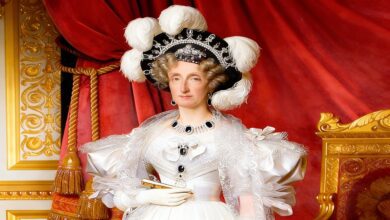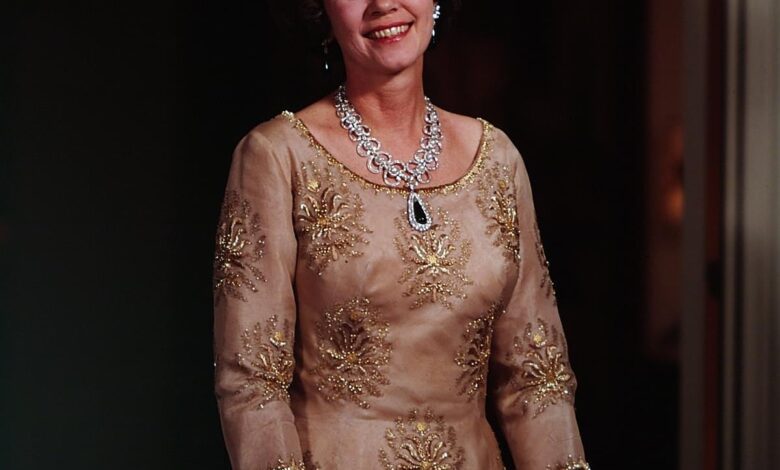
Frederika of Greece, mother of Spain’s honorary Queen Sofía, was a figure defined by contradictions. From an early age, she was groomed for monarchy—not just any ruler, but one with international stature and an unbreakable will. Diplomats privately called her “queennie,” alluding not only to her petite stature but also to the immense energy and determination hidden within this fragile woman.
After returning to Greece from exile at the end of World War II, she immersed herself in social work. When she became queen following her husband Paul I’s ascension to the throne, Frederika devoted all her efforts to rebuilding a devastated country. This dedication earned her the respect of her subjects and many world leaders of that era.
A challenging background
However, her path was far from smooth. From the start—even from her engagement to Crown Prince Paul—Frederika, or “Freddie” as her family called her, raised concerns. She had both German and British ancestry: she was the great-granddaughter of Queen Victoria of England and the granddaughter of Kaiser Wilhelm II. Born on April 18, 1917, in Blankenburg Castle in the German Empire, she was christened with a series of names: Frederika Luise Thyra Victoria Margarita Sophia Olga Cecilia Isabella Krista.
Her father, Ernst August, Prince of Hanover and Duke of Brunswick, belonged to one of Europe’s oldest dynasties—the House of Welf. Frederica was the only daughter among four sons, which toughened her character from an early age and made her fight for her place in the sun. The early years she spent at the family home in Gmunden, Austria, after her father’s abdication, and at Blankenburg Castle, shaped her into a strong and sometimes solitary person who loved animals and nature.
In the atmosphere of aristocratic pride that prevailed in Germany, the rise of the Nazis attracted many noble families to their side. Young Frederica, succumbing to circumstances, joined the Hitler Youth. This fact of her biography would always taint her reputation and sow distrust, even though she later explained in her memoirs that the German nobility had no choice and insisted that she had rejected this ideology as an adult. Nevertheless, the influence of nationalist and militaristic culture left its mark.
Aware of the danger, her parents sent her to study in the United Kingdom, at North Foreland Lodge in Kent, on the advice of Queen Mary. During this time, in 1927, ten-year-old Frederica met her future husband, Prince Paul of Greece, who was her mother’s cousin. This meeting would prove to be fateful for her. She later continued her studies in Florence, where she studied art and philosophy, preparing for her intended role as the wife of a monarch.
Queen on the throne
The marriage proposal came in 1936 during the Olympic Games in Berlin. The wedding took place in Athens on January 9, 1938. As crown princess, Frederica gained access to the magnificent jewels of the Greek royal family, which now belong to Anne-Marie of Denmark, wife of the last King of Greece, Constantine II.
Postwar Athens lay in ruins, and Frederica took on the task with enthusiasm. She played an active role in rebuilding hospitals, schools, and orphanages. It was during this time, according to her own words, that she realized “how much she hated Hitler.” In the 1950s, Frederica and Paul traveled extensively, making the queen a well-known and respected figure on the world stage. Her resolve was admired, though at times she acted independently, which led to diplomatic disputes.
Politics and Exile
Controversy surrounding her was linked not only to her youthful fascination with Nazism, but also to her staunch anti-communism. In the 1950s, she openly called communism “the greatest threat to peace,” earning a reputation as an implacable opponent of leftist ideas. Later, in the 1960s, amid a severe economic crisis, she was accused of excessive luxury and extravagance, especially after organizing lavish weddings for her daughter Sofia and son Constantine.
She was also criticized for her active involvement in politics, both during her husband’s reign and especially during the rule of her son Constantine. Her actions are believed to have contributed to the destabilization that eventually led to the 1967 military coup and the expulsion of the entire royal family. Frederica first took refuge in Rome, then in India, where she devoted herself to the study of philosophy. Her influence on her daughters, Sofia and Irene, was enormous. She taught them to endure hardships with resilience, never give up, and remain loyal to the monarchy.
Sofia’s marriage to Juan Carlos brought her great happiness, although it required the young princess to convert to a different faith. Frederica’s life ended suddenly in Madrid on February 6, 1981, due to complications following a minor cosmetic surgery. She was buried next to her husband at the royal cemetery in Tatoi.
Incidentally, Queen Sofia, Frederica’s daughter, held the Spanish throne as the wife of King Juan Carlos I from 1975 to 2014. She is highly respected in the country for her charitable work and dedication to the crown. Despite her mother’s controversial reputation, Sofia managed to become a symbol of stability and dignity for the Spanish monarchy, carrying throughout her life the lessons of resilience she learned from Frederica.