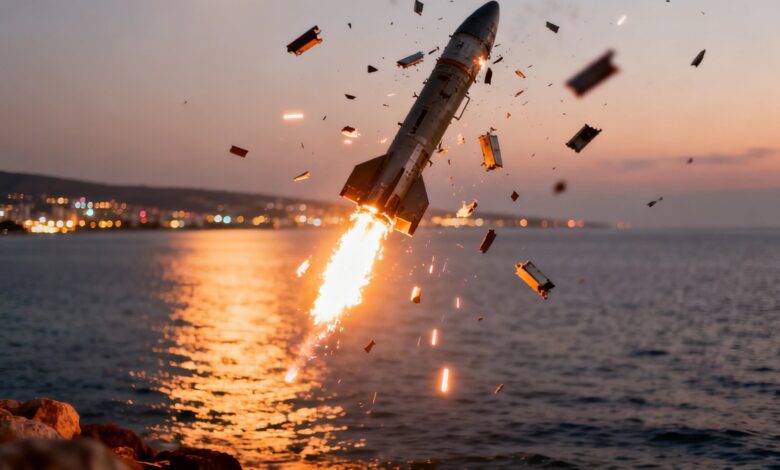
This event is significant for Spain primarily because of its potential impact on alliance logistics and the use of bases on the peninsula. The interception of a missile over the eastern Mediterranean demonstrated that confrontation in the region could affect NATO allies whose infrastructure facilities are located in Europe. In several countries, including Spain, authorities are reviewing base access protocols and security measures for flights with increased attention.
According to the Turkish Ministry of Defense, NATO air defense systems stationed in the eastern Mediterranean shot down a ballistic missile launched from Iran that was heading toward Turkish airspace after passing over Iraq and Syria. The debris fell in the southern regions of the country; no casualties were reported. The exact target of the missile was not stated, but the reported trajectory aligns with a flight path toward a major military base in the Adana area, which hosts support elements for the allies.
The incident occurred amid a large-scale operation reportedly conducted by the US and Israel against Iranian positions. According to reports, Israeli aircraft carried out a series of strikes on targets in Tehran, while Israel’s defense minister emphasized that leaders appointed by the regime would be considered potential targets. This pattern of strikes and counterstrikes increases the risk of accidental involvement of third countries and heightens tension around key transportation and logistics corridors.
The Spanish government promptly denied that the Andalusian bases Morón de la Frontera and Rota were involved in supporting US operations against Iran, reminding that their use is governed by the Defense Cooperation Agreement between Spain and the United States. Under this agreement, Spain retains sovereignty over the territory and its airspace, meaning Madrid controls any use of the infrastructure for foreign operations.
For Spanish military and civil aviation, this is a signal to increase vigilance: even if the alert did not directly concern Spanish facilities, it highlights the vulnerability of flight routes and bases used by allies. Possible changes in aircraft and ship deployment patterns, strengthened air defense measures, and adjustments to flight schedules—all of this could affect both operational activities and civilian transportation in the region.
NATO, for its part, confirmed the involvement of its missile defense assets in the interception, underscoring the level of cooperation within the alliance to protect the airspace of its members and neighbors. In a context where multinational air defense systems are gaining importance, timely data exchange and coordinated response procedures among allies become crucial, requiring additional forces and technical resources.
Spanish authorities continue to monitor the situation and have expressed readiness for consultations within NATO. At the same time, Madrid emphasizes that any changes in the use of military bases will occur in accordance with national regulations and international commitments. Authorities have pledged to inform about risks and potential operational adjustments if such decisions become necessary.
In recent days, local strikes have shown how quickly they can escalate into regional incidents involving the international community. Analysts note that the main priority now is to prevent escalation and safeguard civilian routes. According to a source from RUSSPAIN.com, the alliance is likely to strengthen coordination on air security and clarify access rights to Rota and Morón bases in the coming weeks.
Background: In recent months, regions of the Eastern Mediterranean and the Middle East have already faced similar episodes—missile interceptions, coastal shelling, and incidents near air corridors. Last year, there were raids and strikes that led to temporary flight restrictions and the redeployment of allied forces. International forces repeatedly activated joint air defense systems to protect both civilian and military targets, while control over bases and authorization for use of infrastructure remained subjects of bilateral negotiations among NATO countries and their partners.