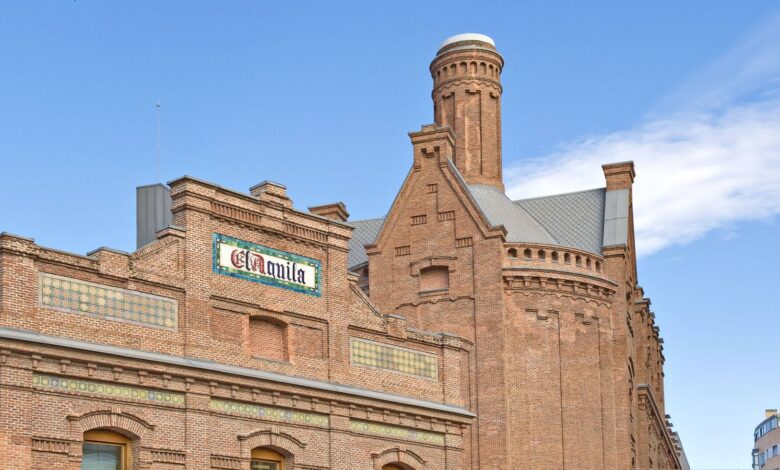
Madrid has made a decision that changes the approach to preserving the urban environment. The former El Águila brewery is now under maximum protection as a site of cultural significance. This is more than a formality: the status safeguards the building from any radical changes, which is important for residents and future generations.
The El Águila complex, located in the Arganzuela district, has become a symbol of the capital’s industrial past. Its brick façades and Neo-Mudéjar style are recognizable among other historic buildings in the city. Now, following the decision of the autonomous government, this ensemble has been officially recognized as a valuable industrial monument.
Architectural heritage
The El Águila project was designed by architect Eugenio Jiménez Corera, who employed expressive red brick masonry. This approach was typical of factory buildings from the early 20th century. The complex is reminiscent of other industrial sites in Madrid, such as the old Tabacalera warehouses and the Mahou factory on Amaniel Street.
The ensemble consists of seven pavilions, each with its own unique features. Special attention has been paid to preserving the original façades, wooden roofs, and elements related to malt production and storage. Thanks to the new status, these details will remain untouched.
From production to culture
El Águila was not always just a monument. At the beginning of the last century, beer was produced here, and the company held a quarter of the market in its segment. During the Civil War, the factory was nationalized, and after the conflict it returned to its former owners and expanded. Production continued until the mid-1980s, after which the building stood empty for a long time.
In 1993, the complex came under the ownership of the regional authorities. Today, it houses the Joaquín Leguina Archive and Library, which have become cultural hubs for the residents of Madrid. The decision to grant it cultural heritage status secures a new role for the building—as a guardian of the city’s memory.
Impact on the city
Preserving El Águila is important not only for architecture specialists. This decision affects the development of the Arganzuela district, where historic buildings attract new projects and initiatives. El Águila serves as an example of how an industrial past can become the foundation for a cultural future.
In recent years, debates on preserving historical sites have become more frequent in Spain. For instance, the authorities recently took emergency steps to legalize migrants, sparking widespread public debate. You can read more about political decisions affecting the urban environment in the article about new government initiatives.
Context and trends
In recent years, Spain has seen growing interest in preserving industrial heritage sites. Projects to protect old factories and warehouses have also been implemented in Barcelona and Valencia, where these spaces are now used as cultural venues. Such initiatives help maintain the unique character of cities and preserve their connection to the past. In Madrid, alongside El Águila, former tobacco factories and power station buildings are also protected, highlighting the significance of industrial heritage for the entire country.