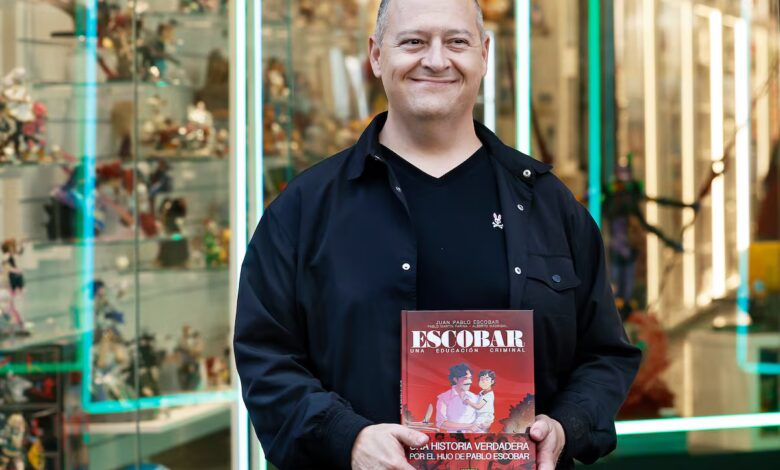
Juan Pablo Escobar, the son of one of the most notorious drug lords of the 20th century, has presented a graphic novel in Spain, where he recounts a childhood filled with anxiety and constant danger. The new comic, published by a Catalan publisher, immerses readers in a world of secrecy and fear, where each day could be the last.
The author—an architect and designer by training—chose an unfamiliar genre to share his perspective with younger audiences. He admits that creating the comic was a personal challenge: it forced him to relive painful memories and to learn how to retell them through illustrations. The book steers clear of glorifying his family’s criminal past, instead focusing on honoring the memory of the victims.
At the heart of the story are the years when the boy lived under the watch of armed men who acted as both bodyguards and caretakers. The constant tension, the impossibility of making plans for the future, and the ever-present sense of threat became part of his coming of age. For greater clarity, the author reduced the number of characters but remained true to real events. According to Escobar, one of the former bodyguards is still alive today and has already read the book.
Life between fear and luxury
Although the father is rarely present in the comic, his influence is felt throughout. The cover depicts a rare moment of closeness between father and son, and in the book’s conclusion, the details of their relationship are revealed. Juan Pablo does not hide that he grew up in a world of contradictions: on one hand, there was wealth; on the other, a constant sense of fear and the realization of what that wealth cost.
In recent years, he has repeatedly apologized to the families of the victims, emphasizing that Colombia’s drug trafficking problem remains unresolved. In his view, fighting drugs requires new strategies, not just force. In the comic, he shares memories of his father’s letters, in which his father tried to comfort him during explosions and gunfights.
An attempt to break the vicious cycle
The author stresses that his goal is not to come to terms with the past, but to dismantle the myth of the “heroic” drug lord. He recalls how, once, his father told him about the dangers of drugs, despite his own role in spreading them. For Juan Pablo, this paradox was yet another reason to tell his story—so that no one would repeat the mistakes of the past.
For him, the comic became a way to make sense of his own life and to show that behind famous names and legends lie real tragedies. He believes it is important not only to remember the victims, but also not to let new generations idealize criminals.