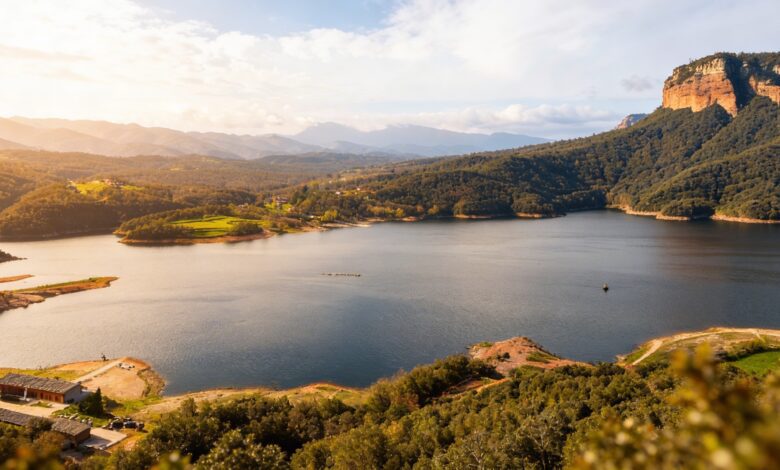
The sharp increase in water reserves in Catalonia’s reservoirs has become one of the key developments for the region at the start of 2026. This surge in water levels directly impacts urban supply, agriculture, industry, and overall water management strategies. For residents, it means a reduced risk of restrictions and new opportunities for growth.
According to El Pais, Catalonia’s internal water basins continue to maintain more than 90% of their maximum capacity. In the first quarter of 2026, the total water level rose from 85% to 91.5%, marking the most significant increase in recent years. By comparison, during the same period last year, the figure did not exceed 63.6%. This growth is attributed not only to weather conditions but also to effective infrastructure and adjustments in water use.
Record levels
Among the region’s largest reservoirs, La Llosa del Cavall stands out, reaching 100.6% capacity, and Riudecanyes with 99.1%. Darnius Boadella, Sau, Susqueda, La Baells, Sant Ponç, and Foix have also shown high figures—from 83% to 95%. Siurana saw a particularly striking jump: in three months, its water level increased from 17% to 76%. The Ter-Llobregat system, supplying water to Barcelona, Girona, and nearby areas, reached 92.2% of its maximum by the end of March.
The impact of weather events such as Storm Harry was felt in January and February, when rainfall significantly replenished reserves. However, in March the pace of growth slowed, and water inflows became more moderate. Despite this, current figures remain among the highest in recent years, giving the region greater confidence regarding water supply.
Snow and its role
The issue of spring snowmelt impacting water resources remains relevant. As El Pais notes, significant snow accumulation is only found in the Llobregat and Ter basins, where areas above 2,000 meters are quite limited. This means meltwater makes a small and gradual contribution to the total reservoir volume. Unlike the Ebro basin, where snow plays a more prominent role, in Catalonia its impact is minimal.
Experts emphasize that most of the snow evaporates, seeps into the soil, or is carried away by the wind, and only a small portion reaches the rivers. Therefore, a sharp increase in reserves due to melting should not be expected. This scenario requires authorities to keep resource management strategies under constant review and adapt as needed.
Desalination and management
Another key element of the region’s water policy remains the operation of desalination plants. Currently, they are running at 50% capacity, which not only maintains a stable water supply but also helps replenish the underground aquifers of Vall Baixa del Llobregat. This approach supports agreements on water distribution between regions and eases pressure on main water sources.
The reduction in desalination output is due to the need to balance Barcelona’s demand with natural resource conservation requirements. Authorities emphasize that this strategy helps prevent future shortages and ensures sustainable development in the region.
Context and trends
In recent years, Catalonia has faced serious challenges from drought and water shortages. In 2023 and 2024, reservoir levels dropped to critical lows, prompting restrictions on water use and a review of tariffs. At that time, authorities had to introduce additional measures, including the launch of new desalination plants and tighter consumption controls.
The situation in 2026 is markedly different: thanks to favorable weather conditions and effective management, the region has not only recovered but also significantly increased its reserves. According to russpain.com, such rapid changes in water levels are rare and require ongoing monitoring. In the future, experts expect Catalonia to continue investing in infrastructure modernization and the development of alternative water sources to minimize the risk of past crises recurring.