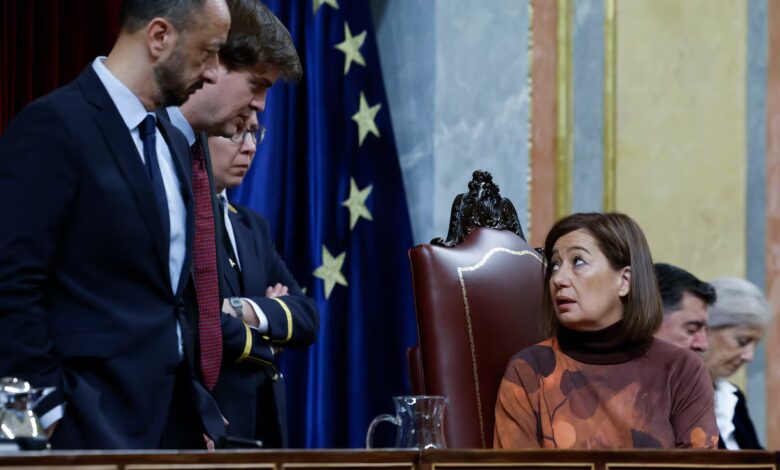
In recent years, Spain’s political scene has seen unprecedented tension between two key institutions: the Senate, dominated by the Partido Popular (PP), and the Congress of Deputies, controlled by the coalition that supported Pedro Sánchez. Since the start of the current legislature, the PP has taken an uncompromising stance against the leadership of the lower house, chaired by Francina Armengol. One of their main tools has been a flurry of appeals to the Constitutional Court—almost thirty have been filed so far. However, none of these appeals have resulted in a victory for the party.
In 2025, the Constitutional Court handed down around twenty rulings concerning the activities of Congress, and in every case sided with the lower house. The Senate, meanwhile, followed through on a previous pledge and filed a lawsuit against the government over a conflict of powers due to the absence of a draft budget in parliament. This is already the third such initiative this year, with the two previous lawsuits also targeting the Congress.
Legal battles
One of the recent disputes arose over an amendment to the Law on the Judiciary concerning pay raises for a specific category of judges. The amendment was introduced as a correction of an error, which caused discontent within the PP. Another controversy centers on the rejection of a Senate amendment to the Food Waste Law, which proposed reducing VAT on staple foods from 4% to 2%. The government exercised its right to block initiatives affecting the current budget, but the PP argues that there were no grounds to do so in this case.
The Constitutional Court is also considering another dispute between the Senate and Congress—this time regarding the implementation of a European directive that allows prisoners to have time served in other countries counted toward their sentence. This measure could reduce prison terms for those convicted of terrorism. The PP overlooked the consequences of the reform in its early stages, and when the situation became public, it tried to introduce changes after the deadline had passed, but Congress refused to consider them.
Major attack
In the case of the food waste law, the PP used every available legal mechanism — in addition to the Senate’s lawsuit, the party filed similar complaints through its parliamentary groups in both chambers. This strategy peaked during the debate over the amnesty law. The challenges targeted not only the substance of the law but also the procedure for its adoption: the PP argued that the initiative should have come from the government, not the Socialists’ parliamentary group. In total, 15 complaints were filed, both from the party’s faction in Congress and from regional governments under PP control. In three regions — Aragón, Murcia, and Cantabria — complaints were submitted by both the executive and legislative branches, with support from the Vox party. All of them were rejected, including those contesting the legislative procedure.
The Constitutional Court also rejected similar lawsuits from Vox and the government of Castilla-La Mancha, where President Emiliano García-Page is known as a traditional opponent of Sánchez within PSOE. This region also tried to contest the distribution of the banking tax among autonomous communities, but that challenge was dismissed in December last year.
Court rulings
Over the past year, the Constitutional Court, where most judges hold progressive views, has reviewed 20 cases involving Congress and in all instances has supported its position. In addition to the amnesty law, the PP lost a dispute over the procedure for last year’s reform that restricted the powers of the Judicial Council after its mandate expired due to a blockage by the PP.
Currently, six more complaints from the PP related to parliamentary activity remain before the court, along with three Senate lawsuits over separation of powers. These include laws on gender equality, public administration modernization, the implementation of a European directive on criminal records, and an attempt by the government to unblock the appointment of two Constitutional Court judges through an amendment to the Penal Code. It was on this last issue that the PP managed to secure a temporary suspension of the law’s review—for the first time in democratic history, the court made such a decision by the narrowest margin.