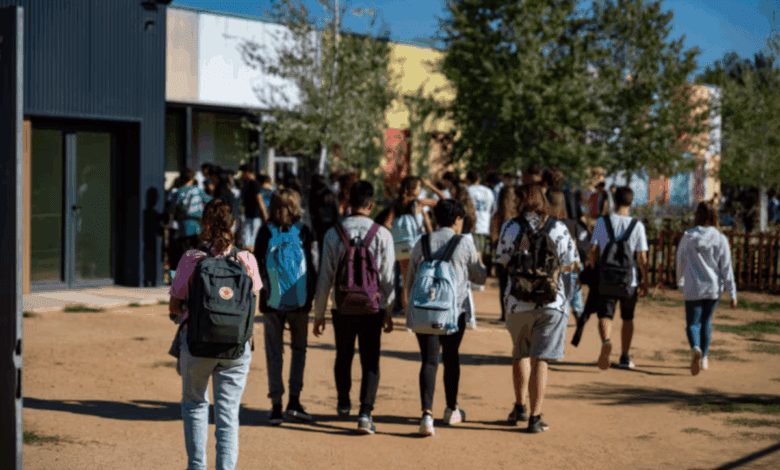
Catalonia is once again facing a shortage of access to public education. In major cities and densely populated areas, parents are struggling with a lack of places in public schools. Meanwhile, state-subsidized private schools, known as concertadas, continue to expand, especially in affluent neighborhoods.
In some rural areas, such as Tarragona (Terra Alta, Montsià, Baix Ebre, Ribera d’Ebre, Priorat) and Lleida (Alta Ribagorça, Pallars Sobirà, Vall d’Aran, Noguera), the situation is different: here, public schools are able to meet demand. But in Barcelona and its suburbs, only just over half of students can expect a place in a municipal school. The rest are forced to look for alternatives among concertadas or private institutions.
Origins of the problem
The roots of the current situation go back decades. After the transition to democracy, the public education system in Catalonia was underdeveloped. Back then, authorities decided to support private schools, which took on public functions, introduced new teaching methods, and offered an alternative to the outdated system. To facilitate this, a funding mechanism was introduced: the state paid teachers’ salaries, while schools were obliged to admit students whom the municipal network could not accommodate.
However, over the past decades, the public school network has not seen significant growth. Instead, the concertada model has strengthened, with funding for such schools consistently increasing. As a result, private schools with public funding have gained the ability to select students based on a range of criteria, which does not always align with the principle of equal access.
Segregation and inequality
In recent years, the situation has worsened due to migration and economic crises. Following 2008, when Catalonia saw a surge of new residents, concertadas became a tool for separating children by social and economic background. As a result, most children from migrant and low-income families now attend public schools, while concertadas are increasingly chosen by affluent families.
Statistics confirm this: in secondary school (ESO), 84% of students with a migrant background attend public institutions. At the same time, the higher the average income in a district, the more concertadas there are—and the fewer migrant children you find in them. This creates a vicious cycle in which access to quality education becomes a privilege rather than a right.
Impact on society
A system that was meant to serve as a tool for equal opportunity now only reinforces social stratification. In Catalonia, education has ceased to be a universal ladder of social mobility. In wealthy neighborhoods, children have access to better schools, while those in poorer areas are left with what remains.
In recent years, none of the left-wing coalitions that have come to power have dared to change the existing model. The issue of education system reform remains unresolved, while parents and experts continue to debate how to restore public schools to a leading role and ensure equal opportunities for all children in the region.