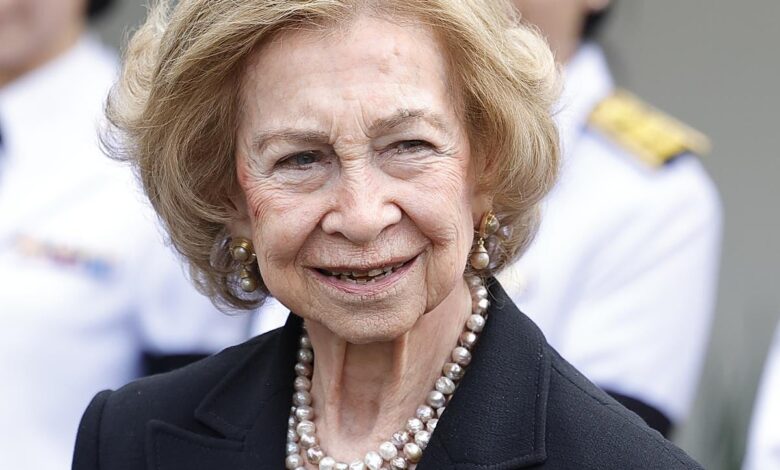
In the Spanish Royal House, nothing happens by chance. Every action, especially those involving public events with the monarchs, is the result of meticulous planning. The decision to award Queen Sofía the Order of the Golden Fleece is no exception—on the contrary, it vividly illustrates this approach. When the news was first announced back in January, it was met with almost unanimous approval across society. There was a consensus that the former Queen had earned such recognition for her decades of service and the steadfastness with which she supported the Crown’s stability during the most challenging times.
This award is seen not only as a state act, but also as a profoundly personal gesture. It is an expression of gratitude from her son, King Felipe VI, to his mother for her unwavering resilience and support, especially in the wake of the recent turmoil faced by the monarchy. And this gratitude is expressed in the highest possible form. The Order of the Golden Fleece is one of the oldest and most prestigious chivalric orders in Europe, and the exclusive right to bestow it belongs solely to the reigning monarch of Spain. Knights of the Order are entitled to the honorific “Excellency” and receive the distinct insignia—a golden ram suspended from a masterfully crafted chain.
The history of the order dates back to 1430, when Philip the Good, Duke of Burgundy, established it to mark his marriage to Isabella of Portugal. The symbol chosen was a golden lamb. A century later, following the marriage of Juana of Castile and Philip the Handsome, the order split into two branches: the Spanish branch, currently headed by the King of Spain, and the Austrian branch, overseen by the head of the House of Habsburg.
Currently, there are only 18 knights of this order worldwide, underscoring its exclusivity. The key moment, however, is that Sofía of Greece will become the first queen consort ever to receive this honor. This is an unprecedented step, as the role of a monarch’s spouse usually lacks a clear constitutional status. The significance of this event is heightened by the timing: the ceremony is linked to the 50th anniversary of Spain’s return to democracy.
The formal ceremony, to be held at the Royal Palace in Madrid, will not only honor Queen Sofía. It will also be part of the celebrations marking half a century since the restoration of the monarchy after the death of Francisco Franco and the proclamation of Juan Carlos I as king on November 22, 1975. Alongside the queen, honorary necklaces will be awarded to former Prime Minister Felipe González and two of the remaining living ‘fathers’ of the Constitution—Miquel Roca and Miguel Herrero y Rodríguez de Miñón.
Thus, Queen Sofía will stand alongside the key figures who ensured Spain’s transition to democracy. This honor highlights her crucial role in stabilizing the young democratic state during serious crises, including not only the attempted coup of 1981 but also other events less known to the general public. The entire royal family, including Princess Leonor and Infanta Sofía, will attend the ceremony, a gesture meant to symbolize the monarchy’s continuity and unity.
Yet behind this facade of unity lies a deep family rift. The absence of honorary King Juan Carlos from such a landmark event appears highly demonstrative. He had previously expressed regret over his lack of contact with the heir to the throne. His current exclusion from the historical narrative of the monarchy’s restoration has seemingly become another painful blow and a cause for significant resentment.