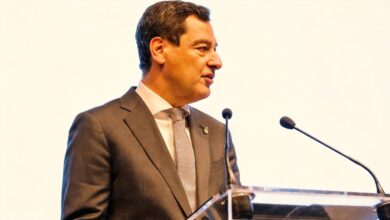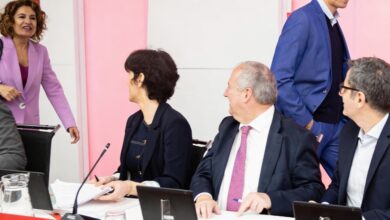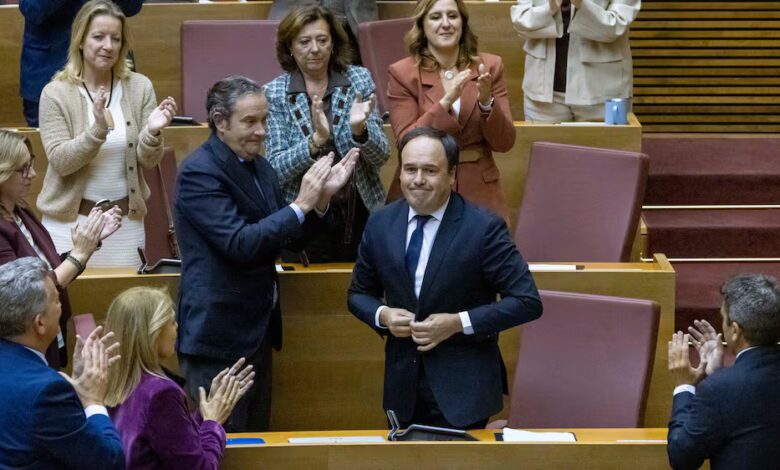
Juan Francisco Pérez Llorca has officially taken office as president of the Valencian government (Generalitat Valenciana), promising that his policies will be guided not by ideology, but by common sense. In his inaugural speech, he emphasized that he will not divide decisions into ‘right’ or ‘left,’ but intends to act solely in the interests of the region’s residents. However, behind these words lies a complex political reality: to secure electoral support, he had to accept nearly all of Vox’s demands.
Pérez Llorca is known as someone skilled at finding compromises and negotiating. His reputation has been built on being in the right place at the right time, a trait that has often helped his political career. Now, as head of the region, he faces the challenge of making decisions that affect not only political interests but the future of all of Valencia.
Ideology or common sense?
In his address to parliament, Pérez Llorca stressed that his proposals are free from ideological bias. He claims to be guided purely by logic and the needs of society. However, such statements are met with skepticism by many. Is it truly possible to separate politics from ideology—especially when it comes to contentious issues like the environment, agriculture, and tourism?
On the same day the new president gave a speech, the first Atlas de la Desertificación de España (ADE) was presented in Alicante. The report revealed that the Valencian Community—and Alicante province in particular—is among the regions most vulnerable to soil degradation and water scarcity. This coincidence only underscored the gap between political rhetoric and the real challenges faced by local residents.
Water, agriculture, and tourism: the three main threats
The authors of the Desertification Atlas note that agriculture remains the chief consumer of water in the region. In recent years, the area of irrigated land has grown to 3.78 million hectares. Even traditional crops for arid areas, such as olive trees, grapes, and almonds, now require additional irrigation. From 2018 to 2024, nearly half a million tons of fruits and vegetables in Spain were destroyed due to overproduction and low market prices.
The tourism industry, which continues to grow in Valencia, only makes the problem worse. An increase in tourist numbers leads to higher water consumption and further strain on the ecosystem. As a result, the region faces a double challenge: on one side, the need to sustain the economy through agriculture and tourism; on the other, the threat of irreversible environmental change.
Political compromise and challenges for the new government
The question of how independent Pérez Llorca’s decisions are remains open. His remarks about the negative impact of the European Green Deal (Pacto Verde europeo) and his criticism of environmental initiatives align with the position of Vox, whose support was essential for his election. However, so far these remain just words—the new government’s real actions are yet to come.
The scientific community warns that without urgent measures, the situation with desertification and water shortages could become irreversible. The causes of land degradation lie not only in the expansion of agricultural areas, but also in the inefficient use of resources in the tourism sector. It is becoming increasingly difficult to ignore these facts, especially amid growing concern among local residents.
Hopes and concerns of Valencia’s residents
Many are wondering how Pérez Llorca will address problems that can no longer be ignored. Will he continue to deny the impact of climate change, as some of his political allies demand, or will he heed the opinions of scientists and experts? The answers to these questions will only become clear after the new government takes its first concrete steps.
For now, Valencia’s residents are watching the new leader’s actions, hoping that his promises of common sense will turn into real solutions. Time will tell whether Pérez Llorca can find a balance between political interests and the need to protect the region’s future.