Thirty years ago, a show premiered on Broadway that redefined the musical genre. Rent, inspired by the opera La Bohème, told the story of young artists in New York at the turn of the millennium. Their dreams and passions collided with harsh realities: poverty, drugs, HIV, and the struggle for housing. Creator Jonathan Larson poured his own experiences into the story, passing away just a day before its premiere. His work became a symbol of a generation and, over the years, a cult classic staged worldwide and adapted for film.
Today, Rent returns to the stage at Madrid’s Teatro Fernán Gómez. Decades later, its themes of friendship, love, self-discovery, and fighting for one’s place in the world remain as relevant as ever. Yet the new production, directed by José Luis Sixto, feels unexpectedly removed from the original spirit.
Missing the Edge
The biggest difference is the musical arrangement. In the ’90s, Rent was a true rock anthem, but now the electric guitar is almost gone, replaced by keyboards. This has given the sound a softer feel but stripped the show of the inner tension that once gripped the audience. The emotional intensity of the scenes has noticeably lessened, and many moments now seem overly sweet and even sterile.
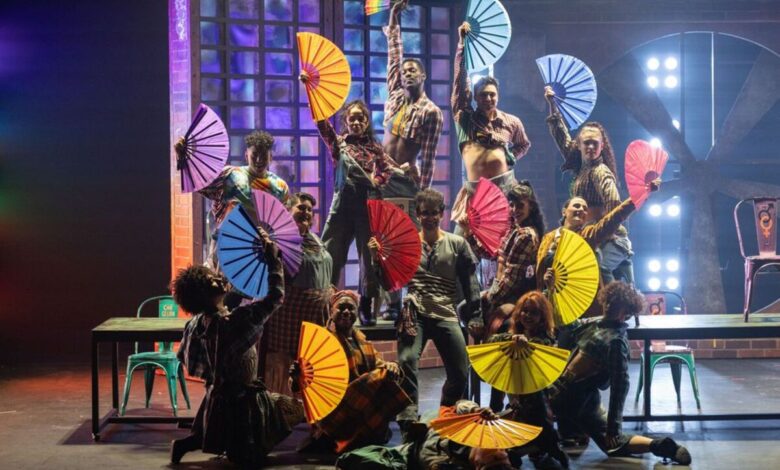
From the very first minutes, a large ballet troupe appears on stage, accompanying the main characters in almost every song. Instead of highlighting the characters’ loneliness, the ensemble blurs the conflict, turning the drama into a series of dance numbers. At times, it feels as if the production targets the TikTok generation more than those seeking genuine emotion in theater.
Stage and sound
Visually, the production is impressive: the lighting is based on a play of shadows and gradients, and the stage is always bustling with people. However, this makes it hard for the audience to follow the story, especially for those sitting farther away. The strongest moments come when only one or two actors remain on stage—that’s when the performance gains depth and sincerity.
However, the main issue is the hall’s acoustics. The sound often distorts the lyrics, and the audience can’t always make out the songs or dialogues. For a musical, where every intonation matters, this becomes a serious obstacle. Jokes, hints, subtle nuances—all get lost, and the performance loses part of its meaning.
Standout moments
Despite its shortcomings, the production has some truly brilliant moments. Carla Pulpón, who plays Maureen, absolutely steals the show in the scene where her character leads a protest against the eviction of the artists. Thirty years ago, this role made Idina Menzel a star. Now, the Spanish actress not only matches her, but captivates the audience with her voice and charisma. It’s one of those rare moments when the audience forgets everything else and simply enjoys the performance.
The premiere took place on December 23, and since then the theater has been nearly full at every show. Audiences of all ages come to see the new Rent, with long applause for the cast after the finale. Even King Felipe VI and Queen Letizia, along with their daughters, attended the show incognito and spent time with the company.
A Time for Change
Rent was conceived as a work meant to shake things up and make people think. Larson wrote it for those unafraid to be different, for seekers of love and freedom despite their fears and setbacks. Thirty years later, these themes still resonate with young audiences. But the latest version, for all its technical polish and standout scenes, feels a bit too calculated and safe. It lacks the spirit of rebellion that Rent was created to ignite.
Nevertheless, even in this form, the musical continues to fill theaters. Perhaps that is the main proof of its relevance. Just like thirty years ago, audiences come to the stage seeking answers to their questions—even if they don’t always find them where they expected.