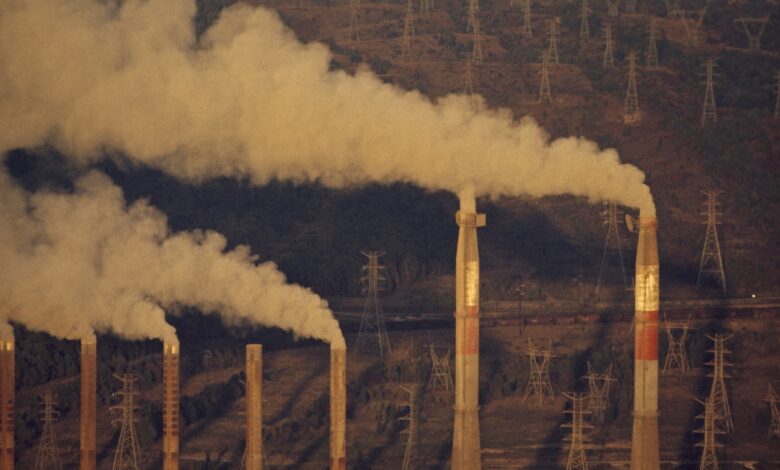
The issue of atmospheric pollution from emissions by energy and industrial enterprises remains highly relevant in many countries. Despite the active adoption of renewable sources, thermal power plants still account for a significant share of global generation, resulting in vast amounts of carbon dioxide and other harmful compounds.
According to experts, Russia ranks among the top five largest greenhouse gas emitters, and annual levels continue to rise. For businesses, this means not only environmental responsibility but also significant financial costs: emission treatment requires major investment, while penalties for exceeding limits are becoming increasingly substantial.
Current disposal methods, such as chemical washing or the use of biological filters, involve high expenses for reagents, energy, and maintenance of complex equipment. As a result, environmental requirements are often seen as an additional burden on businesses.
Engineers at Perm National Research Polytechnic University have proposed an alternative approach. Their system converts flue gases generated from fuel combustion directly into dimethyl ether—a highly sought-after product for the chemical and fuel industries.
Dimethyl ether is used as an environmentally friendly motor fuel and as a feedstock for producing various hydrocarbons. It is typically obtained in two stages: first, methanol is synthesized, which is then converted into the ether. The new method eliminates the need for intermediate steps, significantly simplifying the process and reducing energy consumption.
The technology offers a comprehensive solution: a special device and an optimized disposal method. First, flue gases are mixed with methane or natural gas, and then the mixture is heated to a high temperature using the heat generated during the process itself. This minimizes external energy input.
Inside the reactor, at temperatures up to 950°C, the components of the gas mixture react with a nickel-based catalyst. As a result, synthesis gas—a mixture of hydrogen and carbon monoxide—is formed. To achieve the optimal composition, a small amount of air and methane is added.
Next, the synthesis gas is cooled, dried, and compressed to the required pressure. It then enters a reactor, where at around 250°C it is converted into dimethyl ether. Excess heat is used to maintain the necessary operating conditions, and any remaining gas is either recycled back into the process or removed in minimal amounts.
As a result of implementing such a system, companies can not only significantly reduce harmful emissions but also generate additional profit by selling a valuable chemical product. Economic efficiency is achieved by eliminating the need for expensive reagents and complex pre-treatment stages.
This development opens up new opportunities for modernizing energy facilities and industry. As environmental standards become stricter, such technologies are becoming a key tool for sustainable development and enhancing the competitiveness of businesses.