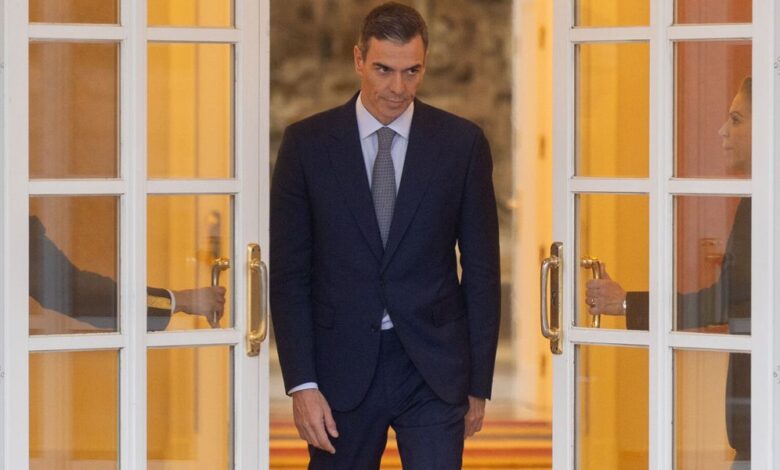
Madrid will host a series of meetings next week that could shape Spain’s foreign policy agenda. Prime Minister Pedro Sánchez has announced the start of consultations with parliamentary parties regarding the possible involvement of Spanish troops in an international peacekeeping mission in Ukraine. The first meeting will take place on Monday at the Prime Minister’s residence, the Palacio de la Moncloa, where Sánchez will discuss the situation with People’s Party leader Alberto Núñez Feijóo. On Tuesday, Sumar’s representative in Congress, Verónica Martínez Barbero, will join the talks.
Authorities openly admit that this is a potentially historic decision that could redefine not only Spain’s role on the international stage but also shift its domestic political balance. While the issue of military involvement in Ukraine remains hypothetical for now, the fact that it is being debated at the highest level signals the seriousness of the government’s intentions. Meetings with representatives of all parliamentary factions are scheduled in order of their size in Congress.
Political landscape
Deputy Prime Minister and Labor Minister Yolanda Díaz has already confirmed that talks between Sánchez and Barbero will go ahead despite the Prime Minister’s tight schedule. The meeting was moved to Tuesday because Sánchez will be attending the World Economic Forum in Davos, where he is set to address world leaders, including US President Donald Trump.
After talks with Feijóo and Barbero, the prime minister will continue meetings with the other parties. This time, the government is in no rush to conclude the consultations within a few days—discussions may stretch on for weeks. Authorities emphasize that there is no need for an immediate decision, and each party will have the chance to express its stance.
Sumar’s position is already clear: they are willing to support Spain’s participation in the peacekeeping mission, but only if the operation is under the auspices of the UN or OSCE. This approach reflects the caution of left-wing forces, who do not want to involve the country in a military conflict without an international mandate.
Domestic political nuances
Partido Popular leader Feijóo insists that his meeting with Sánchez should address not only defense matters, but also other aspects of foreign policy, including Spain’s stance on the situation in Venezuela. He is also demanding clarification regarding defense spending, which could become a stumbling block in the negotiations.
The official agenda does not include domestic issues, but it is possible that party leaders will take the opportunity to raise concerns important to Spanish society. Among them are funding for the autonomous regions and new government initiatives in the housing sector. Sánchez’s latest housing policy proposals have already heightened tensions between coalition partners PSOE and Sumar. Yolanda Díaz has stated that a government compromise on this issue will need to be found.
International context
The situation surrounding Ukraine remains at the forefront of attention in European capitals. As a member of the EU and NATO, Spain cannot ignore what is happening in Eastern Europe. Any decision to potentially deploy troops to the conflict zone requires not only domestic political consensus, but also a clear international mandate. In this context, Sumar’s stance appears pragmatic, while Sánchez’s caution seems entirely justified.
At the same time, Spain’s participation in a peacekeeping mission could become a bargaining chip between parties. For the government, it’s an opportunity to strengthen its position on the international stage, while for the opposition, it’s a chance to demand concessions on domestic issues. It’s possible that negotiations will drag on, and a final decision will be made only after lengthy consultations.
Parliamentary intrigue
Behind closed doors, discussions have already begun in parliament. Some MPs fear that the issue of sending troops could be used to divert attention from pressing social problems. Others, on the contrary, believe Spain should show solidarity with its allies and not lag behind other European countries.
One thing is clear for now: Sánchez faces a complex diplomatic game, where not only the country’s international image is at stake, but also the stability of the ruling coalition. Any decision regarding Ukraine will be a litmus test for Spanish politics in 2026.