The discussion of the aftermath of the Valencia disaster has become for Spaniards not only a matter of commemorating the victims, but also a litmus test for assessing the maturity of the country’s political system. The primary focus was not on the tragedy itself, but rather on the conduct of deputies and party leaders, whose actions sparked a storm of emotions and debates about the acceptable limits of political rivalry.
During the commission meeting investigating the events related to the devastating natural disaster that claimed hundreds of lives, the atmosphere in the Congreso de los Diputados resembled a battlefield for political clashes rather than a place of seeking answers. Instead of constructive dialogue on the causes and consequences of the tragedy, the hall filled with mutual reproaches, applause, and even laughter, provoking outrage among many observers.
Political clashes
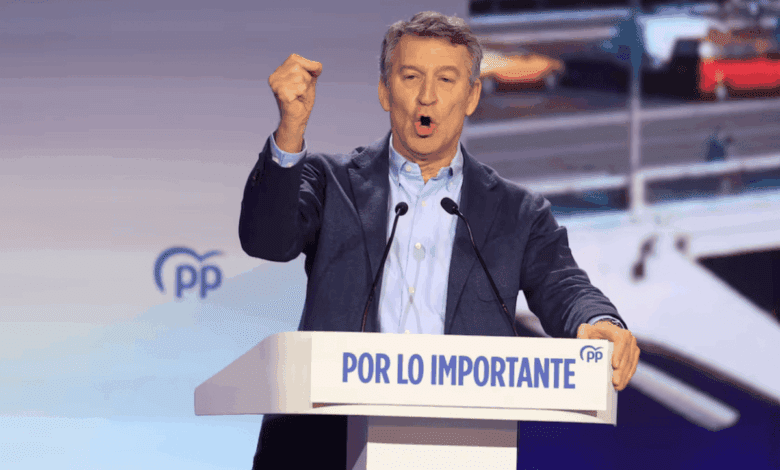
The remarks by Alberto Núñez Feijóo, leader of the Partido Popular (PP), marked the start of a new wave of confrontation between the parliamentary factions. His responses to questions from commission members often turned into sharp attacks on opponents, only increasing tensions. One of the most controversial moments came when Feijóo again raised the issue of ETA, dodging direct answers regarding Valencia, which triggered a heated response from EH Bildu deputy Oskar Matute.
PP deputies openly showed their support for their leader, banging on tables and applauding as if at a sporting event. In response, representatives of other parties did not hold back their emotions, resorting at times to sarcasm and ironic remarks. The entire scene resembled a theatrical performance rather than a serious discussion of a national tragedy.
The forgotten victims
Amid these political clashes, the commission’s main objective was sidelined: to find out why the necessary measures to prevent the disaster were not taken and who was responsible for the loss of life. Instead, the discussion increasingly shifted towards mutual accusations, reminders of past scandals, and attempts to equate others’ mistakes with their own.
This was especially painful for the relatives of the deceased, for whom the scenes in the chamber looked like mockery of the victims’ memory. Previous tragedies came to mind, when politicians exploited people’s suffering for their own interests, inevitably provoking public outrage.
Online reaction
The tensions didn’t subside after the session ended—on the contrary, they spilled over onto social media. Members of the Partido Popular actively shared videos with the “best moments” of Feijóo’s speech, accompanied by comments in the style of sports reviews. Senator Alicia García and the party’s general secretary Miguel Tellado made no secret of their satisfaction, and the official PP accounts joined in, posting ironic and provocative content.
This approach only reinforced the impression that, for many involved, being in the spotlight mattered more than truly understanding the causes of the tragedy and preventing such incidents in the future. At the same time, representatives from other parties were not left out, responding to colleagues’ barbs with their own comments and sarcastic remarks.
Focus Lost
During the discussion, questions unrelated to the investigation kept coming up, further diluting the core issue. Some lawmakers made inappropriate jokes and remarks, while attempts to steer the conversation back to the tragedy often ran into a wall of mutual distrust and irritation.
As a result, the commission meeting became yet another example of how political interests can outweigh real societal issues. For many Spaniards, this raised the question of how far partisan divisions have gone and whether it’s time to rethink how issues affecting people’s lives are addressed.
In recent years, Spain has repeatedly faced situations where investigations into major tragedies have become a battleground for political disputes. After the train accident in Galicia in 2013 and the disaster at the festival in Madrid in 2012, investigative commissions were also accompanied by scandals and mutual accusations. Such cases only deepen public distrust in the authorities and raise questions about the need to reform the system of parliamentary investigations. Each new incident tests the political establishment, but so far, few politicians are willing to put citizens’ interests above party ambitions.