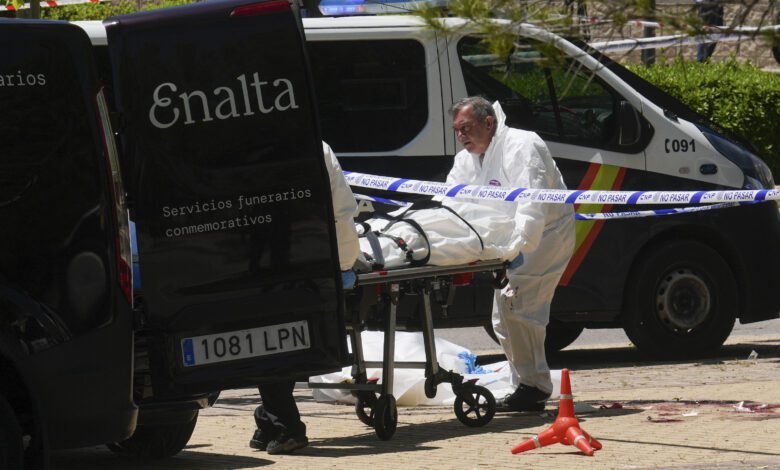
A high-profile decision by Madrid authorities has impacted not only a single family but the entire private education system in Spain. After the tragic murder of Andriy Portnov at the gates of Colegio Americano in Pozuelo, his daughters found themselves at the center of a scandal: they were expelled from school citing safety concerns. This move sparked a strong reaction among parents, educators, and experts, as it raises questions about children’s rights and how educational institutions respond to emergencies.
Intervention by the regional Department of Education became a turning point. Following a complaint from the victim’s widow, Anastasiia Valiaieva, officials conducted an investigation and concluded that there were no disciplinary or financial grounds for excluding the children. It was acknowledged that their right to education had been violated, and the school was ordered to immediately reinstate the students. The institution was given ten days to comply, posing a real challenge for the school’s administration.
School response
The management of Colegio Americano did not agree with the decision and announced plans to appeal it. School representatives maintain that their actions were in the best interests of all students, taking into account the international makeup of the community and heightened anxiety following the tragedy. According to them, after the murder at the school gates, parents and students were gripped by fear, and psychologists recommended that the girls not return temporarily to prevent further trauma.
The school describes the situation as unprecedented: most students are children of embassy and consulate staff or major companies, making safety a top priority. However, the decision to temporarily suspend the girls sparked a wave of criticism, especially after it emerged that there were no official grounds for their exclusion.
The family’s position
The Portnov family’s lawyer, Pedro Resino, sharply criticized the school’s actions. According to him, the girls were excluded at the most difficult moment in their lives, without explanation or support. He stressed that such behavior does not reflect the values expected of an elite school and that the children were effectively isolated and deprived of their right to education.
The girls’ mother insisted that the school’s decision was driven not by concerns for safety, but by a desire to avoid uncomfortable questions and potential conflict within the community. She filed an official complaint, prompting an investigation that led to a high-profile decision by the authorities.
Public reaction
The scandal around Colegio Americano generated widespread public response. Parents of other students were divided: some supported the administration, believing safety should come first, while others sympathized with the family and condemned the exclusion of the children. A debate erupted in social networks and the media over how schools should act in such situations and where to draw the line between protecting the community and violating the rights of individual students.
Psychologists note that such decisions can worsen the trauma for children who have experienced tragedy, and may lead to their social isolation. At the same time, security experts emphasize that after high-profile crimes, educational institutions often face pressure and are forced to take unpopular measures.
Context and consequences
In recent years, Spain has faced several cases where schools made controversial decisions following emergencies. In 2024, after an attack on a student’s parent in Barcelona, the administration temporarily moved his children to remote learning, which also sparked debate. In Valencia in 2025, following a security threat incident, some students were temporarily suspended, but authorities later intervened to return them to classrooms. These cases demonstrate that the issue of balancing safety and children’s rights remains highly relevant for Spanish society.