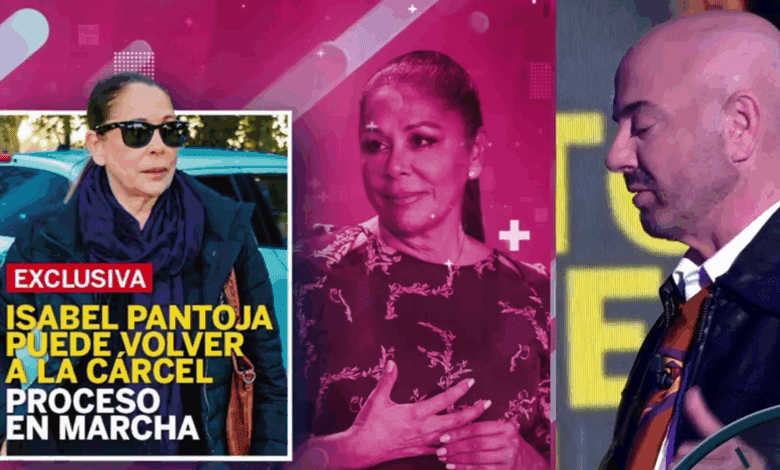
The fate of one of Spain’s most famous singers is once again hanging by a thread: Isabel Pantoja has found herself at the center of a legal drama that could cost her her freedom. After Hacienda initiated criminal proceedings for unpaid taxes totaling over one million euros, the prospect of the artist returning behind bars has become more real than ever. The loss of the Cantora estate, once a symbol of family prosperity, only made matters worse, leaving the singer without her main asset and without hope for a payment extension.
In 2014, the name Isabel Pantoja made headlines across the country: she spent 14 months in prison for a case involving the legalization of income linked to the high-profile Operación Malaya. It seemed that after her release the artist would be able to rebuild her career and life, but financial troubles never let her go. Now, a decade later, history is repeating itself—only the stakes are even higher, and the consequences could be irreversible.
Debt trap
The debt to the Spanish tax authorities has reached €1,010,000. The Cantora estate served as the main collateral for these obligations, but when the bank did not receive payment on the loan, it seized the property and put it up for auction. Reports say that after the singer left, the house was left in a dilapidated state, further complicating the process of selling the asset.
The situation is further complicated by the fact that the proceeds from the sale are not enough to fully pay off the debt to Hacienda. Thus, even after the auction, Isabel Pantoja will still owe the state a significant sum. Since all possible extensions and agreements have been exhausted, the tax authorities have moved to the strictest measure — criminal prosecution.
A real threat of prison
In Spain, a tax debt exceeding €150,000 is automatically classified as a criminal offense. In Isabel Pantoja’s case, the amount owed is several times higher than this threshold, making the prospect of real jail time almost inevitable. The law provides for a punishment of one to five years in prison, and any previous convictions only worsen the singer’s situation.
Lawyers note that in cases of repeat offenses, even the minimum sentence can result in immediate imprisonment. For Pantoja, given her background, the likelihood of a reduced sentence is extremely low. Behind the scenes in show business, people are already discussing how this new scandal will affect her reputation and future projects.
Impact on her career
Losing Cantora has been not only a financial blow but also a symbolic one for Isabel Pantoja. For many years, this estate was an integral part of her image and family history. Now, as the property has been auctioned off and her debts continue to mount, many partners and producers are reconsidering their relationships with the singer.
What is particularly telling is that even major platforms previously interested in producing a series about Pantoja’s life have started to withdraw from the project. The reason: the artist’s inflated demands and her reluctance to disclose personal details, making the project too risky for investors. As a result, her plans for a comeback and an international tour are now in jeopardy.
Family and personal dramas
There has always been drama surrounding Isabel Pantoja, and the current crisis is no exception. Looking back at other high-profile stories from the world of Spanish celebrities, it’s clear how personal and financial issues often overlap. For example, the recent case involving Ilia Topuria, where surprising changes in his family and career became a talking point in a feature about the sudden power shift in the UFC champion’s household, vividly illustrates how fragile stability can be even for the most famous personalities.
In Pantoja’s case, pressure from creditors, tax authorities, and the public is intensifying by the day. The question of whether she can avoid another jail term remains unanswered, while fans and critics alike watch events unfold with bated breath.
Isabel Pantoja is one of the brightest stars of Spanish popular music, with a career that began back in the 1970s. Over decades on stage, she has become a symbol of Andalusian culture and flamenco, while her personal life has often attracted media attention. Despite numerous challenges, the singer has always returned to her art, surprising audiences with new projects and concerts. However, the current crisis may prove to be the most serious test of her life, threatening not only her freedom but also the legacy she has built over the years.