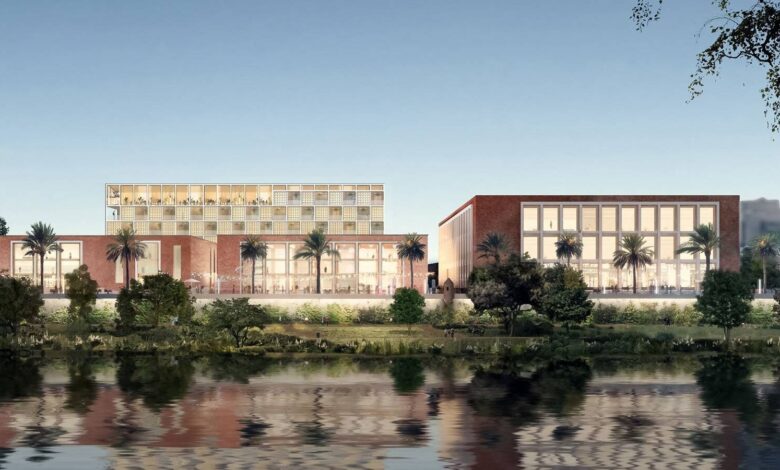
In the heart of Sevilla, on the site of the former Altadis tobacco factory, the large-scale Vera Sevilla project is taking shape. Now, one of the global leaders in the gaming industry, Scopely, is joining the mix. The developer behind hit mobile games like Monopoly GO! has announced the relocation of over 200 employees to this modern complex, which is poised to become the city’s new business and cultural hub.
Alongside Scopely, other major players are setting up operations in Vera Sevilla: the regional Chamber of Commerce (Cámara de Comercio de Sevilla) will open its doors here, as well as Moeve (formerly Cepsa), which is expanding beyond Madrid for the first time. This lineup of tenants underscores the project’s ambition to make Vera Sevilla a key hub for business, technology, and hospitality in Andalucía.
A new center of attraction
For Scopely, this move represents not just expansion, but a commitment to a long-term presence in Sevilla. The company had long been seeking a space of about 2,000 square meters to bring its local teams together. Back in 2017, Scopely acquired local studio Genera Games, which later became the foundation for the European center Genjoy. Currently, Scopely employs around 200 people in Sevilla and another 700 in Barcelona, where, following a €13.5 million investment, the largest gaming hub in southern Europe was recently opened.
The Sevilla office, led by Enrique Tapias, handles development and support for some of the company’s top titles: Monopoly GO!, Stumble Guys, Star Trek Fleet Command, and Yahtzee With Buddies. These projects have made Scopely a global leader in mobile entertainment, with the company’s total game downloads numbering in the billions.
Architecture and infrastructure
The Vera Sevilla complex is being built on a grand scale, with €250 million invested in the project. It will feature a luxury hotel with 210 rooms, designed by Carlos Ferrater, offering its own spa, swimming pool, gym, and a spacious event hall. Nearby, the Vera — El Cubo building, designed by Kengo Kuma, will provide more than 10,000 sq. meters of office space and private areas.
Three additional buildings — Rama 1, 2, and 3 — also designed by Ferrater, will add another 9,000 sq. meters of office space with terraces overlooking the river. These facilities are set to be operational by early 2026. At the heart of the complex, a new 4,000 sq. meter city square will be created between the Vera building and the historic Las Cigarreras chapel, envisioned as a new public space for residents and visitors alike.
Business Activity
The Seville Chamber of Commerce will occupy more than 3,000 sq. meters in the complex, featuring offices, meeting rooms, networking zones, and event spaces. The leasing of office and commercial space is managed by the international consulting firm CBRE, which has already attracted the interest of major tech and service companies.
A key infrastructure addition will be a pedestrian bridge over the Guadalquivir, connecting Los Remedios with the city’s historic center. The bridge, with a budget of around €10 million, will be fully financed by KKH Property Investors. Construction is set to begin early next year, with completion scheduled for December 2026.
Change for the city
Construction of Vera Sevilla is in full swing: exterior work is nearly complete, and the office buildings are rapidly rising. Most of the complex is expected to open as early as 2026, bringing new momentum to an area that has long been overlooked.
For Scopely, moving to Vera Sevilla means not only new opportunities for growth, but also greater brand visibility in the region. For the complex itself, it guarantees daily business activity and an influx of new residents. And for Sevilla, it’s the start of a new era: the former tobacco factory is transforming into a hub for tech companies, the hotel sector, and urban initiatives.
The partnership between Scopely and Vera Sevilla marks a profound transformation along the Los Remedios waterfront. An area that once stood as the city’s boundary now becomes an open gateway for business, tourism, innovation, and new urban links between the neighborhood and the river.