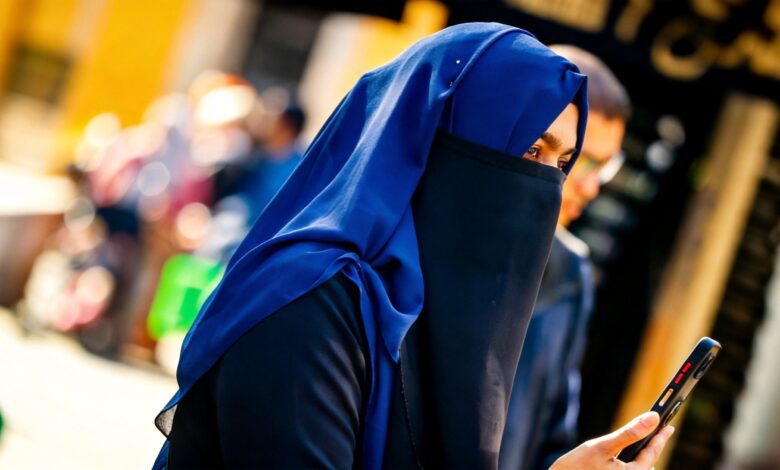
The introduction of restrictions on wearing burqas and niqabs in municipal institutions in Seville has sparked heated debate, as such measures raise issues of freedom of religion and human rights. The city council’s decision has triggered discussions among lawyers and politicians, since the Supreme Court of Spain has previously ruled against similar bans, casting doubt on the legal validity of these new initiatives. For residents, this could mean changes in access to public services and new challenges for the principles of equality.
As El Pais notes, Seville is the latest city where a ban on religious garments that fully cover the face is being discussed. Similar initiatives were previously adopted in Burgos, Cordoba, and Alcala de Henares, but none of them received final legal approval. In 2013, the Supreme Court overturned such a ban in Lleida, emphasizing that these decisions should be made at the national level, not by municipalities.
Legal obstacles
Despite the initiative’s approval in Seville, city authorities acknowledge there is no legal framework for its implementation. The city is now awaiting a legal opinion to determine whether restrictions can be introduced without violating constitutional rights. In Alcalá de Henares, a similar request was made a month ago, but there has been no response yet. Legal experts emphasize that any restrictions related to religious clothing may be considered discriminatory and contrary to fundamental freedoms.
Constitutional law professor Joaquín Urias believes such initiatives have no real authority and serve more as political statements than actual measures. He points out that the Supreme Court has already ruled that religious freedom cannot be restricted at the municipal level. In his view, any attempts to introduce such bans are mainly symbolic gestures with no practical significance.
Political context
Most similar initiatives in Spain are promoted by Vox and Partido Popular, linking them to migration issues and the protection of women. However, a number of analysts argue that there are no real grounds for these measures: instances of women appearing in burqas or niqabs in municipal buildings are extremely rare. The opposition in Seville points to the lack of social tension on this issue and calls the initiative politically motivated.
Izquierda Unida deputy Ismael Sánchez notes that in recent years there have been no recorded cases of women wearing burqas or niqabs at city council meetings or at other official events. PSOE representatives also emphasize that such measures could further isolate women rather than support their integration into society. They insist that integration should be achieved through education and the protection of human rights, not through bans.
Restrictions and exceptions
In its 2013 ruling, the Supreme Court clarified that municipalities do not have the authority to restrict fundamental rights such as freedom of religion. Exceptions are only possible in cases involving security—for example, at airports or when carrying out certain professional duties. Professor of religious law Rafael Palomino stresses that any restrictions must be justified in detail and cannot be of a general nature.
The text of the initiative adopted in Sevilla refers to the need for visual identification of citizens, but it remains unclear how this will be implemented in practice. City council representatives state that the decision will only take effect after legal assessment. Meanwhile, the opposition continues to call for a review of the initiative, pointing out its discriminatory nature and the lack of real grounds for introducing such measures.
Similar debates in Spain
In recent years, Spain has repeatedly witnessed debates over restrictions on religious clothing. For instance, the Catalonia parliament recently rejected a similar initiative, while in the Congress of Deputies a proposal to amend the legislation failed to gain majority support. Such debates reflect a broader European context, where issues of identity, security, and freedom intersect in public spaces. In other regions of the country, related issues of restrictions and bans are also discussed, as was the case with the historic bridge in Jaén, when local authorities faced criticism for lack of clear decisions.
Overall, the practice of introducing restrictions on religious clothing in Spain remains highly controversial and rarely results in actual changes. Most such initiatives encounter legal and social obstacles, and their discussion often serves as a pretext for political debates. In recent years, attention to this issue has intensified amid migration processes and shifts in the structure of society, but actual cases of implementing bans remain rare.
In other European countries, such as France and Belgium, stricter laws regulate the wearing of religious clothing in public places. In Spain, however, such measures have not become widespread, and any attempts to introduce them spark heated debates among experts, politicians, and human rights advocates. The question of balancing security, freedom, and integration remains open and requires further discussion at the national level.