In recent months, Spain has been in the spotlight due to its large-scale support for Ukraine, a move that directly influences the country’s political and economic landscape. As the US has scaled back its involvement and some European nations have shown fatigue, Madrid has become one of Kyiv’s key partners. This decision has already impacted Spain’s international image and could affect domestic economic priorities.
Rising support and new visits
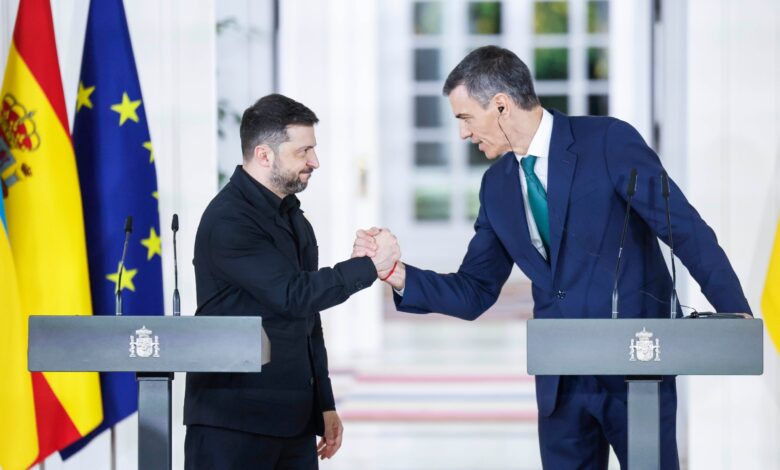
In the coming days, Ukrainian President Volodymyr Zelensky is expected to visit, marking his fourth trip in the past four years. According to El Pais, Zelensky’s arrival coincides with a period when global attention has shifted to events in the Middle East, pushing the Ukrainian conflict out of the spotlight. Despite this, Spain continues to ramp up assistance, underscoring its commitment to support Kyiv even amid external pressure.
According to El Pais, since February 2022 Spain has provided almost €17 billion in financial and humanitarian aid. The bulk of this — €16.223 billion — has been contributed through European Union structures. Another €641 million comes in the form of direct guarantees, with €321 million linked to EU macro-financial support and €320 million tied to obligations to international financial institutions, including the World Bank, EBRD, and EIB.
Breakdown and comparison of aid
Additionally, the Agency for International Cooperation (AECID) allocated €72 million in grants: €59 million for humanitarian needs and €13 million for infrastructure restoration. These figures do not include military aid, which has also grown significantly over the past two years.
According to the Kiel Institute, similar support volumes are reported: €17.14 billion through the EU and another €3.45 billion under bilateral programs. This puts Spain as the tenth largest donor to Ukraine among 40 countries, including the US, UK, and Japan. Among EU members, Spain ranks sixth, behind Germany, France, Italy, Sweden, and the Netherlands. When relating aid volume to GDP, Spain is in 15th place, allocating 1.71% of its 2021 GDP.
Military support and new deliveries
According to the Kiel Institute, Spain’s military aid amounted to €2.67 billion, representing 77.4% of all bilateral support. From January 2024 to June 2025, Spanish companies supplied Ukraine with weapons worth €110.3 million. The main supplies were munitions: 30,000 155mm artillery shells, 23,200 grenades, and other ammunition. In addition, as of June 2025, contracts worth €446.2 million were approved but not yet executed.
In addition, Spain has supplied used equipment from the arsenals of its armed forces, valued at €384 million. This list includes Leopard 2A4 tanks, guided missiles, Hawk systems, Mistral launchers, and armored vehicles. Recently, Ukraine received from Spain a modern Lanza LTR-25 radar system worth €37 million, capable of detecting aerial targets at distances over 400 km. The contract includes training for Ukrainian specialists and technical support.
Training and medical assistance
Spain plays an active role in the EUMAM Ukraine mission, under which over 8,500 Ukrainian troops have already been trained—about 10% of the total trained in the EU. Coordination is based at the Infantry School in Toledo. In addition, wounded Ukrainian soldiers are treated at the Zaragoza military hospital.
Financial support from NATO has also been a key part of the aid: Spain contributed €100 million to the PURL fund, which is intended for the purchase of American weaponry for Ukraine. After the reduction of military support from the United States, European countries have increased their assistance—military aid by 67% and non-military aid by 59% compared to the average of the previous three years.
Context and consequences
Questions of funding and aid distribution are becoming increasingly urgent amid rising expenses and budgetary pressures. As noted by El Pais, the majority of military support comes from Germany and the United Kingdom, providing two-thirds of the total contribution. Meanwhile, Spain continues to increase its share, despite ongoing domestic debates about spending priorities.
Against the backdrop of new challenges linked to the Middle East conflict, debates in Spain are intensifying over the need to adjust tax policies and reallocate budget resources. For instance, authorities in Madrid have already proposed cutting taxes on fuel and energy to offset rising costs for families, a topic discussed in detail in the article on proposals to reduce the tax burden due to the crisis in Iran.
In recent years, Spain has repeatedly strengthened its participation in international humanitarian and military missions, particularly during periods of intensified conflicts in Europe and beyond. Notably, in 2023, the country increased its contributions to EU funds supporting Eastern Europe and expanded training programs for foreign military specialists. These decisions often sparked domestic debates about balancing foreign policy with internal social priorities. In 2024, for example, measures to support families and businesses amid rising energy prices were discussed, a topic tied to international crises and sanctions.