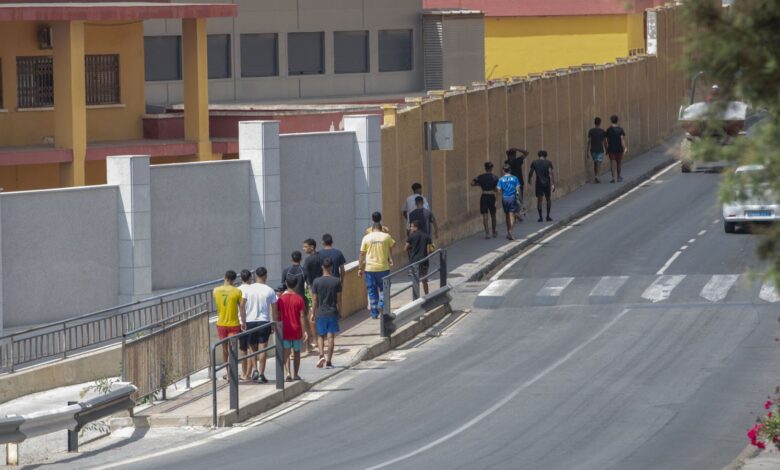
The Spanish government has approved new regulations for the distribution of unaccompanied minor migrants among the autonomous communities. According to the decree, there must be 32.6 places available per 100,000 residents in each region to accommodate children and adolescents arriving in the country without parents or guardians.
These regulations are established in a special royal decree approved at a meeting of the Council of Ministers. The document defines the so-called “regular capacity” of the country’s protection and guardianship system for minor migrants. If any region exceeds the established limit by three times, it will be considered to be experiencing an emergency migration situation. In such cases, a special protocol for redistributing children among other autonomous communities will be activated.
Authorities note that the new rules comply with the provisions of the updated law on the rights and freedoms of foreigners in Spain, as well as on their social integration. In particular, this refers to an additional article introduced following the adoption of the royal decree at the beginning of 2025.
According to the calculations, the highest capacity for receiving underage migrants is planned in Andalucía with 2,827 places, in Catalonia with 2,650, and in Madrid with 2,325. Other regions include: Galicia with 886 places, Castilla y León with 783, Canary Islands with 737, Basque Country with 731, Murcia with 517, Castilla-La Mancha with 692, Aragón with 441, Balearic Islands with 406, Extremadura with 344, Asturias with 331, Navarra with 223, Cantabria with 194, La Rioja with 107, Ceuta with 27, and Melilla with 28.
This concerns children and teenagers who arrive in Spain alone, without adult guardians. The state emphasizes its obligation to provide them with decent reception conditions, demonstrating solidarity and humanity. Authorities note that the new measures will create a fairer and more effective system for distributing responsibility between regions and will accelerate the integration process for underage migrants.
The Ministry of Youth and Childhood Affairs considers the adoption of new regulations to be a significant step in developing the system for receiving and protecting migrant children. In the near future, protocols will be implemented for transferring minors between regions if redistribution becomes necessary due to capacity limits being exceeded in specific autonomous communities.
Authorities stress that the efforts to provide decent conditions for underage migrants have been ongoing for several months, despite challenges and disagreements among some regions. The new standards are expected to increase the level of coordination and accountability among all participants in the process.